Live briefing

Everything about Static random-access memory
Type of computer memory
Static random-access memory is a type of random-access memory (RAM) that uses latching circuitry (flip-flop) to store each bit. SRAM is volatile memory; data is lost when power is removed. Wikipedia →
🧭 Start here: a 6-step reading path
- Read the overview: Static random-access memoryA 5-minute orientation
- Skim a recent paper: Enabling static random-access memory cell scaling with monolithic 3D integration of 2D field-effect transistorsInfluential work since 2022
- Pick up a classic book: The C Programming LanguageThe most-reprinted book on the subject
- Read the landmark paper: Solution-processed carbon nanotube thin-film complementary static random access memoryCited 201 times
- Go sideways: Random-access memoryA closely related topic
- Go sideways: Dynamic random-access memoryA closely related topic
📖 Definitions
No dictionary entry for this exact phrase.
🗂️ The subject at a glance
🏆 Landmark papers (most cited)
Solution-processed carbon nanotube thin-film complementary static random access memory
Low Leakage Single Bitline 9 T (SB9T) Static Random Access Memory
Electron-Induced Single-Event Upsets in Static Random Access Memory
Nonvolatile static random access memory based on spin-transistor architecture
High‐Performance and Radiation‐Hard Carbon Nanotube Complementary Static Random‐Access Memory
2D Materials‐Based Static Random‐Access Memory
Statistical Simulation of Static Noise Margin Variability in Static Random Access Memory
A soft-error resilient low power static random access memory cell
🆕 Influential since 2022
Enabling static random-access memory cell scaling with monolithic 3D integration of 2D field-effect transistors
Static Response of Three-Dimensional and Printed Complementary Organic TFTs-Based Static Random-Access Memory
Total Ionizing Dose Effects on the Power-Up State of Static Random-Access Memory
Low Power Static Random-Access Memory Cell Design for Mobile Opportunistic Networks Sensor Nodes
Design and Leakage Power Optimization of 6T Static Random Access Memory Cell Using Cadence Virtuoso
📚 Books worth reading
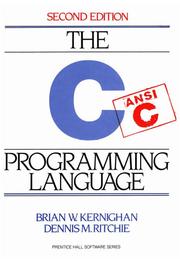 The C Programming LanguageBrian W. Kernighan, Dennis MacAlistair Ritchie · 1978
 C How to ProgramPaul J. Deitel, Harvey M. Deitel · 2007
 Computer ArchitectureJoseph D. Dumas II · 2005
 The web application hacker's handbookDafydd Stuttard, Marcus Pinto · 2007
 Memory Component HandbookIntel Corporation. · 1983
 Testing static random access memoriesSaid Hamdioui · 2004
 SystemVerilog for VerificationChris Spear · 2006
 NanosystemsK. Eric Drexler · 1992
Ranked by number of editions on Open Library, a rough measure of how lasting a book is.
🔗 Related topics
- Random-access memory Random-access memory (RAM; /ræm/) is a form of electronic computer memory that can be read and changed in any order, typically used to store working data…
- Dynamic random-access memory Dynamic random-access memory (dynamic RAM or DRAM) is a type of random-access semiconductor memory that stores each bit of data in a memory cell. A DRAM…
- Computer memory Computer memory stores information, such as data and programs, for immediate use in the computer; instructions fetched by the computer, and data fetched…
- Volatile memory Volatile memory, in contrast to non-volatile memory, is computer memory that requires power to maintain the stored information; it retains its contents…
- Semiconductor memory Semiconductor memory is a digital electronic semiconductor device used for digital data storage, such as computer memory. It typically refers to devices…
- Memory cell (computing) The memory cell is the fundamental building block of computer memory. The memory cell is a device, such as an electronic circuit, that stores one bit of…
- 1T-SRAM 1T-SRAM is a pseudo-static random-access memory (PSRAM) technology introduced by MoSys, Inc. in September 1998, which offers a high-density alternative…
- Memory refresh Memory refresh is a process of periodically reading information from an area of computer memory and immediately rewriting the read information to the same…