Live briefing

Everything about Computer memory
Component that stores information
Computer memory stores information, such as data and programs, for immediate use in the computer; instructions fetched by the computer, and data fetched and stored by those instructions, are located in computer memory. The terms memory, main memory, and primary storage are also used for computer memory. Wikipedia →
🧭 Start here: a 6-step reading path
- Read the overview: Computer memoryA 5-minute orientation
- Skim a recent paper: A compute-in-memory chip based on resistive random-access memoryInfluential work since 2022
- Pick up a classic book: Upgrading and repairing PCsThe most-reprinted book on the subject
- Read the landmark paper: Scheme for reducing decoherence in quantum computer memoryCited 3,805 times
- Go sideways: Semiconductor memoryA closely related topic
- Go sideways: Memory cell (computing)A closely related topic
📖 Definitions
No dictionary entry for this exact phrase.
🗂️ The subject at a glance
🏆 Landmark papers (most cited)
Scheme for reducing decoherence in quantum computer memory
A Logic-in-Memory Computer
Reconstructive Memory: A Computer Model*
Vector Computer Memory Bank Contention
A computer simulation model of person memory
A Survey on Memory-centric Computer Architectures
The association of memory complaint with computer-simulated everyday memory performance
Memory requirements for balanced computer architectures
🆕 Influential since 2022
A compute-in-memory chip based on resistive random-access memory
A crossbar array of magnetoresistive memory devices for in-memory computing
A 64-core mixed-signal in-memory compute chip based on phase-change memory for deep neural network inference
Ferroelectric-defined reconfigurable homojunctions for in-memory sensing and computing
📚 Books worth reading
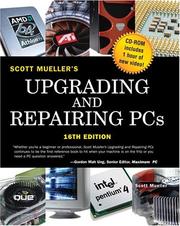 Upgrading and repairing PCsScott Mueller, Mark Edward Soper · 1988
 Computer Engineering and TechnologyWeixia Xu · 2013
 Escape from memoryMargaret Peterson Haddix · 2003
- 📕Garbage Collection HandbookJones, Richard, Antony Hosking · 2016
 Magnetic memoryDenny D. Tang · 2010
 A primer on memory consistency and cache coherenceDaniel J. Sorin · 2011
 DeleteViktor Mayer-Schönberger, Viktor Nberger · 2009
 Flash memoriesPaulo Cappelletti · 1999
Ranked by number of editions on Open Library, a rough measure of how lasting a book is.
🔗 Related topics
- Semiconductor memory Semiconductor memory is a digital electronic semiconductor device used for digital data storage, such as computer memory. It typically refers to devices…
- Memory cell (computing) The memory cell is the fundamental building block of computer memory. The memory cell is a device, such as an electronic circuit, that stores one bit of…
- Random-access memory Random-access memory (RAM; /ræm/) is a form of electronic computer memory that can be read and changed in any order, typically used to store working data…
- Reading (computer) Reading is an action performed by computers, to acquire data from a source and place it into their volatile memory for processing. Computers may read informatio…
- Static random-access memory Static random-access memory (static RAM or SRAM) is a type of random-access memory (RAM) that uses latching circuitry (flip-flop) to store each bit. SRAM…
- Read-only memory Read-only memory (ROM) is a form of non-volatile memory used in computers and other electronic devices. Data stored in ROM cannot be electronically modified…
- Non-volatile random-access memory Non-volatile random-access memory (NVRAM) is random-access memory that retains data without applied power. This is in contrast to dynamic random-access…
- Dynamic random-access memory Dynamic random-access memory (dynamic RAM or DRAM) is a type of random-access semiconductor memory that stores each bit of data in a memory cell. A DRAM…