Live briefing
Everything about Sequencing
In genetics and biochemistry, determining the structure of an unbranched biopolymer
In genetics and biochemistry, sequencing means to determine the primary structure of an unbranched biopolymer. Sequencing results in a symbolic linear depiction known as a sequence which succinctly summarizes much of the atomic-level structure of the sequenced molecule. Wikipedia →
🧭 Start here: a 6-step reading path
- Read the overview: SequencingA 5-minute orientation
- Skim a recent paper: Single‐cell RNA sequencing technologies and applications: A brief overviewInfluential work since 2022
- Pick up a classic book: A Court of Thorns and RosesThe most-reprinted book on the subject
- Read the landmark paper: DNA sequencing with chain-terminating inhibitorsCited 42,653 times
- Go sideways: Sanger sequencingA closely related topic
- Go sideways: PyrosequencingA closely related topic
📖 Definitions
Verb present participle and gerund of sequence
Noun Arrangement in a sequence.
Noun The procedure of determining the order of amino acids in the polypeptide chain of a protein (protein sequencing) or of nucleotides in a DNA section comprising a gene (gene sequencing).
🗂️ The subject at a glance
🏆 Landmark papers (most cited)
DNA sequencing with chain-terminating inhibitors
limma powers differential expression analyses for RNA-sequencing and microarray studies
Cutadapt removes adapter sequences from high-throughput sequencing reads
QIIME allows analysis of high-throughput community sequencing data
The Genome Analysis Toolkit: A MapReduce framework for analyzing next-generation DNA sequencing data
SPAdes: A New Genome Assembly Algorithm and Its Applications to Single-Cell Sequencing
HTSeq—a Python framework to work with high-throughput sequencing data
Initial sequencing and analysis of the human genome
🆕 Influential since 2022
Single‐cell RNA sequencing technologies and applications: A brief overview
Next-Generation Sequencing Technology: Current Trends and Advancements
Analysing high-throughput sequencing data in Python with HTSeq 2.0
High-coverage whole-genome sequencing of the expanded 1000 Genomes Project cohort including 602 trios
NanoPack2: population-scale evaluation of long-read sequencing data
📚 Books worth reading
 A Court of Thorns and RosesSarah J. Maas · 2013
 When You Bit...Adam Fieled · 2006
 Gene Cloning and DNA AnalysisT. A. Brown · 2001
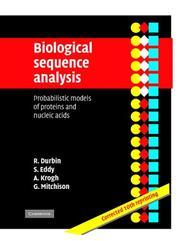 Biological sequence analysisRichard M. Durbin, Sean R. Eddy · 1998
 BioinformaticsAndreas D. Baxevanis, B. F. Francis Ouellette · 2001
 Introduction to cancer biologyRobin Hesketh · 2012
 Automatic sequencesJean-Paul Allouche, Jeffrey Shallit · 2003
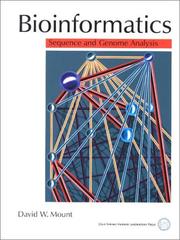 BioinformaticsDavid W. Mount · 2001
Ranked by number of editions on Open Library, a rough measure of how lasting a book is.
🔗 Related topics
- Sanger sequencing Sanger sequencing is a method of DNA sequencing that involves electrophoresis and is based on the random incorporation of chain-terminating dideoxynucleotides…
- Pyrosequencing Pyrosequencing is a non-electrophoretic DNA sequencing (determining the order of nucleotides in DNA) method based on the "sequencing by synthesis" principle…
- Massively parallel sequencing Massively parallel sequencing (MPS) is any of several high-throughput approaches to DNA sequencing using the concept of massively parallel processing;…
- Glossary of cellular and molecular biology (M–Z) This glossary of cellular and molecular biology is a list of definitions of terms and concepts commonly used in the study of cell biology, molecular biology…
- Illumina dye sequencing Illumina dye sequencing is a technique used to determine the series of base pairs in DNA, also known as DNA sequencing. The reversible terminated chemistry…
- DNA sequencing DNA sequencing is the process of determining the nucleic acid sequence – the order of nucleotides in DNA. It includes any method or technology that is…
- Dideoxynucleotide Dideoxynucleotides are chain-elongating inhibitors of DNA polymerase, used in the Sanger method for DNA sequencing. They are also known as 2',3' because…
- Primer (molecular biology) A primer is a short, single-stranded nucleic acid used by all living organisms in the initiation of DNA synthesis. A synthetic primer is a type of oligo…