Live briefing

Everything about DNA sequencing
Process of determining the nucleic acid sequence
DNA sequencing is the process of determining the nucleic acid sequence – the order of nucleotides in DNA. It includes any method or technology that is used to determine the order of the four bases: adenine, thymine, cytosine, and guanine. The advent of rapid DNA sequencing methods has greatly accelerated biological and medical research and discovery. Wikipedia →
🧭 Start here: a 6-step reading path
- Read the overview: DNA sequencingA 5-minute orientation
- Skim a recent paper: Nanopore-based technologies beyond DNA sequencingInfluential work since 2022
- Pick up a classic book: Gene Cloning and DNA AnalysisThe most-reprinted book on the subject
- Read the landmark paper: DNA sequencing with chain-terminating inhibitorsCited 42,649 times
- Go sideways: Third-generation sequencingA closely related topic
- Go sideways: GenomicsA closely related topic
📖 Definitions
No dictionary entry for this exact phrase.
🏆 Landmark papers (most cited)
DNA sequencing with chain-terminating inhibitors
The Genome Analysis Toolkit: A MapReduce framework for analyzing next-generation DNA sequencing data
Detection of specific sequences among DNA fragments separated by gel electrophoresis
Ultrafast and memory-efficient alignment of short DNA sequences to the human genome
Evolutionary trees from DNA sequences: A maximum likelihood approach
A framework for variation discovery and genotyping using next-generation DNA sequencing data
Tandem repeats finder: a program to analyze DNA sequences
DnaSP 6: DNA Sequence Polymorphism Analysis of Large Data Sets
🆕 Influential since 2022
Nanopore-based technologies beyond DNA sequencing
Drag-and-drop genome insertion of large sequences without double-strand DNA cleavage using CRISPR-directed integrases
Predicting RNA splicing from DNA sequence using Pangolin
DeepSTARR predicts enhancer activity from DNA sequence and enables the de novo design of synthetic enhancers
Predicting RNA-seq coverage from DNA sequence as a unifying model of gene regulation
📚 Books worth reading
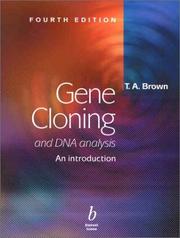 Gene Cloning and DNA AnalysisT. A. Brown · 2001
- 📕DNA systematicsS. K. Dutta · 1986
 Introduction to cancer biologyRobin Hesketh · 2012
- 📕DNA NanoscienceKenneth Douglas · 2016
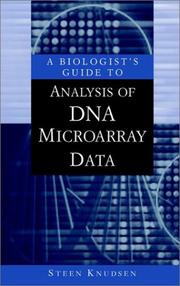 A biologist's guide to analysis of DNA microarray dataSteen Knudsen · 2002
 RNA and DNA EditingHarold C. Smith · 2007
- 📕Next Generation Sequencing Data AnalysisXinkun Wang · 2016
 Bacterial Integrative Mobile Genetic ElementsAdam P. Roberts, Peter Mullany · 2013
Ranked by number of editions on Open Library, a rough measure of how lasting a book is.
🔗 Related topics
- Third-generation sequencing Third-generation sequencing (also known as long-read sequencing) is a class of DNA sequencing methods that have the capability to produce substantially…
- Genomics Genomics is an interdisciplinary field of molecular biology focusing on the structure, function, evolution, mapping, and editing of genomes. A genome is…
- Nanopore sequencing Nanopore sequencing is a third generation approach used in the sequencing of biopolymers — specifically, polynucleotides in the form of DNA or RNA. Nanopore…
- Epigenomics Epigenomics is the study of the complete set of epigenetic modifications on the genetic material of a cell, known as the epigenome. The field is analogous…
- DNA sequencer A DNA sequencer is a scientific instrument used to automate the process of DNA sequencing. Given a DNA sample, the DNA sequencer is used to determine the…
- Massively parallel sequencing Massively parallel sequencing (MPS) is any of several high-throughput approaches to DNA sequencing using the concept of massively parallel processing;…
- Single-molecule real-time sequencing Single-molecule real-time (SMRT) sequencing is a parallelized single molecule DNA sequencing method. Single-molecule real-time sequencing utilizes a zero-mode…
- Fluorescent in situ sequencing Fluorescent in situ sequencing (FISSEQ) is a method of sequencing a cell's RNA while it remains in tissue or culture using next-generation sequencing.…