Everything about Logical consequence
Relationship in which one statement follows from another
Logical consequence is a fundamental concept in logic which describes the relationship between statements that hold true when one statement logically follows from one or more statements. A valid logical argument is one in which the conclusion is entailed by the premises, because the conclusion is the consequence of the premises. The philosophical analysis of logical consequence involves the following questions: In what sense does a conclusion follow from its premises? and What does it mean for a conclusion to be a consequence of premises? All of philosophical logic is meant to provide accounts of the nature of logical consequence and the nature of logical truth. Wikipedia →
🧭 Start here: a 6-step reading path
- Read the overview: Logical consequenceA 5-minute orientation
- Skim a recent paper: Temperature chaos as a logical consequence of the reentrant transition in spin glassesInfluential work since 2022
- Pick up a classic book: Politics of LogicThe most-reprinted book on the subject
- Read the landmark paper: Sex role adaptability: One consequence of psychological androgyny.Cited 902 times
- Go sideways: Validity (logic)A closely related topic
- Go sideways: Philosophy of logicA closely related topic
📖 Definitions
No dictionary entry for this exact phrase.
🗂️ The subject at a glance
🏆 Landmark papers (most cited)
Sex role adaptability: One consequence of psychological androgyny.
Dendritic Spine Pathology: Cause or Consequence of Neurological Disorders?
Glycals in Organic Synthesis: The Evolution of Comprehensive Strategies for the Assembly of Oligosaccharides and Glycoconjugates of Biological Consequence
Tarski on truth and logical consequence
Logical Consequence and the Paradoxes
DEFLATING LOGICAL CONSEQUENCE
The Concept of Logical Consequence
Tarski on Logical Consequence
🆕 Influential since 2022
📚 Books worth reading
- 📕Politics of LogicPaul Livingston · 2012
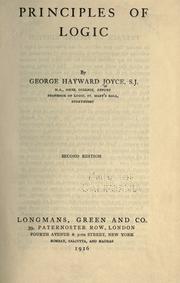 Principles of logicGeorge Hayward Joyce · 1908
 Truth and consequence in mediaeval logicErnest A. Moody · 1953
 Grounded Consequence for Defeasible LogicAldo Antonelli · 2005
 Jean Buridan's LogicJean Buridan, P. King · 1985
- 📕Logical ConsequencesRudolf Dreikurs · 1968
- 📕Semantic Conception of LogicGil Sagi, Jack Woods · 2021
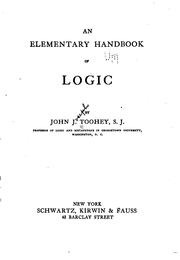 An elementary handbook of logicToohey, John Joseph · 1918
Ranked by number of editions on Open Library, a rough measure of how lasting a book is.
🔗 Related topics
- Validity (logic) In logic, specifically in deductive reasoning, an argument is valid if and only if it takes a form that makes it impossible for the premises to be true…
- Philosophy of logic Philosophy of logic is the branch of philosophy that studies the scope and nature of logic. It investigates the philosophical problems raised by logic…
- Soundness In logic, soundness can refer to either a property of arguments or a property of formal deductive systems. An argument is sound if (and only if) it is…
- Argument An argument is one or more premises—sentences, statements, or propositions—directed towards arriving at a logical conclusion. The purpose of an argument…
- Rule of inference Rules of inference are ways of deriving conclusions from premises. They are integral parts of formal logic, serving as the logical structure of valid arguments…
- Deductive reasoning Deductive reasoning is the process of drawing valid inferences. An inference is valid if its conclusion follows logically from its premises, meaning that…
- Logic Logic is the study of correct reasoning. It includes both formal and informal logic. Formal logic is the study of deductively valid inferences or logical…
- Propositional logic Propositional logic is a branch of classical logic. It is also called statement logic, sentential calculus, propositional calculus, sentential logic, or…