Everything about Logic
Study of correct reasoning

Logic is the study of correct reasoning. It includes both formal and informal logic. Formal logic is the study of deductively valid inferences or logical truths. It examines how conclusions follow from premises based on the structure of arguments alone, independent of their topic and content. Informal logic is associated with informal fallacies, critical thinking, and argumentation theory. Informal logic examines arguments expressed in natural language whereas formal logic uses formal language. When used as a countable noun, the term "a logic" refers to a specific logical formal system that articulates a proof system. Logic plays a central role in many fields, such as philosophy, mathematics, computer science, and linguistics. Wikipedia →
🧭 Start here: a 6-step reading path
- Read the overview: LogicA 5-minute orientation
- Skim a recent paper: Single-atom logic for heterocycle editingInfluential work since 2022
- Pick up a classic book: Tractatus Logico-PhilosophicusThe most-reprinted book on the subject
- Read the landmark paper: Evolving to a New Dominant Logic for MarketingCited 10,740 times
- Go sideways: Rule of inferenceA closely related topic
- Go sideways: Logical reasoningA closely related topic
📖 Definitions
Adjective Logical.
Noun A method of human thought that involves thinking in a linear, step-by-step manner about how a problem can be solved. Logic is the basis of many principles including the scientific method.
Noun The study of the principles and criteria of valid inference and demonstration.
Noun The mathematical study of relationships between rigorously defined concepts and of mathematical proof of statements.
🗂️ The subject at a glance
🏆 Landmark papers (most cited)
Evolving to a New Dominant Logic for Marketing
An experiment in linguistic synthesis with a fuzzy logic controller
Service-dominant logic: continuing the evolution
The Logic of Animal Conflict
Fuzzy logic in control systems: fuzzy logic controller. I
Diplomacy and domestic politics: the logic of two-level games
Institutions and axioms: an extension and update of service-dominant logic
Linear logic
🆕 Influential since 2022
Single-atom logic for heterocycle editing
Quantum logic with spin qubits crossing the surface code threshold
Co-opting signalling molecules enables logic-gated control of CAR T cells
Logic Tensor Networks
A Logic‐Based Diagnostic and Therapeutic Hydrogel with Multistimuli Responsiveness to Orchestrate Diabetic Bone Regeneration
📚 Books worth reading
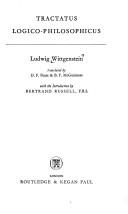 Tractatus Logico-PhilosophicusLudwig Wittgenstein · 1921
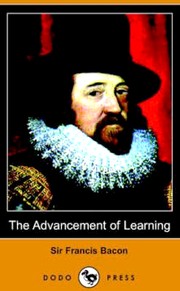 The advancement of learningFrancis Bacon · 1605
 An Investigation of the Laws of Thought (Barnes & Noble)George Boole · 1854
 Algèbre de la logiqueLouis Couturat · 1905
 The Game of LogicLewis Carroll · 1886
 Wissenschaft der LogikGeorg Wilhelm Friedrich Hegel · 1812
 The principles of scienceWilliam Stanley Jevons · 1874
 The art of logical thinkingWilliam Walker Atkinson · 1909
Ranked by number of editions on Open Library, a rough measure of how lasting a book is.
🔗 Related topics
- Rule of inference Rules of inference are ways of deriving conclusions from premises. They are integral parts of formal logic, serving as the logical structure of valid arguments…
- Logical reasoning Logical reasoning is a form of thinking or information processing that aims to arrive at a conclusion in a rigorous way. It happens in the form of inferences…
- Philosophy of logic Philosophy of logic is the branch of philosophy that studies the scope and nature of logic. It investigates the philosophical problems raised by logic…
- Deductive reasoning Deductive reasoning is the process of drawing valid inferences. An inference is valid if its conclusion follows logically from its premises, meaning that…
- Premise A premise is a proposition offered to support a conclusion. Premises are true or false statements that act as the starting points of arguments by presenting…
- Formal fallacy In logic and philosophy, a formal fallacy is a pattern of reasoning with a flaw in its logical structure (the logical relationship between the premises…
- Argument An argument is one or more premises—sentences, statements, or propositions—directed towards arriving at a logical conclusion. The purpose of an argument…
- Fallacy A fallacy is the use of invalid or otherwise faulty reasoning in the construction of an argument that may appear to be well-reasoned if unnoticed. The…