Everything about Deductive reasoning
Form of reasoning
Deductive reasoning is the process of drawing valid inferences. An inference is valid if its conclusion follows logically from its premises, meaning that it is impossible for the premises to be true and the conclusion to be false. For example, the inference from the premises "all men are mortal" and "Socrates is a man" to the conclusion "Socrates is mortal" is deductively valid. An argument is sound if it is valid and all its premises are true. One approach defines deduction in terms of the intentions of the author: they have to intend for the premises to offer deductive support to the conclusion. With the help of this modification, it is possible to distinguish valid from invalid deductive reasoning: it is invalid if the author's belief about the deductive support is false, but even invalid deductive reasoning is a form of deductive reasoning. Wikipedia →
🧭 Start here: a 6-step reading path
- Read the overview: Deductive reasoningA 5-minute orientation
- Skim a recent paper: Probabilistic and deductive reasoning in the human brainInfluential work since 2022
- Pick up a classic book: Future LogicThe most-reprinted book on the subject
- Read the landmark paper: Linguistic processes in deductive reasoning.Cited 414 times
- Go sideways: Logical reasoningA closely related topic
- Go sideways: Rule of inferenceA closely related topic
📖 Definitions
Noun Inference in which the conclusion cannot be false given that the premises are true.
Noun Inference in which the conclusion is of no greater generality than the premises.
🏆 Landmark papers (most cited)
Linguistic processes in deductive reasoning.
Anatomy of deductive reasoning
DEDUCTIVE REASONING
Individual Differences in Deductive Reasoning
Confidence and accuracy in deductive reasoning
Deductive reasoning in schizophrenia.
Relations between inductive reasoning and deductive reasoning.
At the core of reasoning: Dissociating deductive and non‐deductive load
🆕 Influential since 2022
Probabilistic and deductive reasoning in the human brain
Fine motor skills during early childhood predict visuospatial deductive reasoning in adolescence.
FGeo-DRL: Deductive Reasoning for Geometric Problems through Deep Reinforcement Learning
The link between transitive reasoning and mathematics achievement in preadolescence: the role of relational processing and deductive reasoning
Executive Functions and Improvement of Thinking: An Intervention Program to Enhance Deductive Reasoning Abilities
📚 Books worth reading
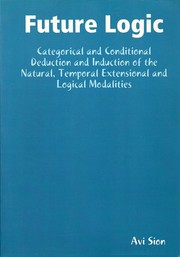 Future LogicAvi Sion · 1990
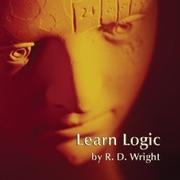 Learn LogicRobert David Wright · 2005
 Handbook of automated reasoningJ. A. Robinson, A. Voronkov · 2001
Ranked by number of editions on Open Library, a rough measure of how lasting a book is.
🔗 Related topics
- Logical reasoning Logical reasoning is a form of thinking or information processing that aims to arrive at a conclusion in a rigorous way. It happens in the form of inferences…
- Rule of inference Rules of inference are ways of deriving conclusions from premises. They are integral parts of formal logic, serving as the logical structure of valid arguments…
- Philosophy of logic Philosophy of logic is the branch of philosophy that studies the scope and nature of logic. It investigates the philosophical problems raised by logic…
- Logic Logic is the study of correct reasoning. It includes both formal and informal logic. Formal logic is the study of deductively valid inferences or logical…
- Argument An argument is one or more premises—sentences, statements, or propositions—directed towards arriving at a logical conclusion. The purpose of an argument…
- Validity (logic) In logic, specifically in deductive reasoning, an argument is valid if and only if it takes a form that makes it impossible for the premises to be true…
- Formal fallacy In logic and philosophy, a formal fallacy is a pattern of reasoning with a flaw in its logical structure (the logical relationship between the premises…
- Modus ponens In propositional logic, modus ponens (/ˈmoʊdəs ˈpoʊnɛnz/; MP), also known as modus ponendo ponens (from Latin 'mode that by affirming affirms'), conditional…