Everything about Argument
Attempt to persuade or to determine the truth of a conclusion

An argument is one or more premises—sentences, statements, or propositions—directed towards arriving at a logical conclusion. The purpose of an argument is to give reasons for one's thinking and understanding via justification, explanation, or persuasion. As a series of logical steps, arguments are intended to determine or show the degree of truth or acceptability of a logical conclusion. Wikipedia →
🧭 Start here: a 6-step reading path
- Read the overview: ArgumentA 5-minute orientation
- Skim a recent paper: Animal board invited review: Animal source foods in healthy, sustainable, and ethical diets – An argument against drastic limitation of livestock in the food systemInfluential work since 2022
- Pick up a classic book: The uses of argumentThe most-reprinted book on the subject
- Read the landmark paper: An argument for basic emotionsCited 6,833 times
- Go sideways: Deductive reasoningA closely related topic
- Go sideways: Logical reasoningA closely related topic
📖 Definitions
Noun A fact or statement used to support a proposition; a reason.
Noun A series of propositions organized so that the final proposition is a conclusion which is intended to follow logically from the preceding propositions, which function as premises.
Noun A process of reasoning; argumentation.
Noun An abstract or summary of the content of a literary work such as a book, a poem or a major section such as a chapter, included in the work before the content itself; the contents themselves.
🏆 Landmark papers (most cited)
An argument for basic emotions
Unsettling the Coloniality of Being/Power/Truth/Freedom: Towards the Human, After Man, Its Overrepresentation--An Argument
Thematic Proto-Roles and Argument Selection
Personal involvement as a determinant of argument-based persuasion.
Narration as a human communication paradigm: The case of public moral argument
The effects of involvement on responses to argument quantity and quality: Central and peripheral routes to persuasion.
Heuristic processing can bias systematic processing: Effects of source credibility, argument ambiguity, and task importance on attitude judgment.
Nonverbal overload: A theoretical argument for the causes of Zoom fatigue.
🆕 Influential since 2022
Animal board invited review: Animal source foods in healthy, sustainable, and ethical diets – An argument against drastic limitation of livestock in the food system
The concept of vulnerability in aged care: a systematic review of argument-based ethics literature
ChatGPT-supported collaborative argumentation: Integrating collaboration script and argument mapping to enhance EFL students’ argumentation skills
Consumers’ self-reported and brain responses to advertising post on Instagram: the effect of number of followers and argument quality
Children and Youth in Strategic Climate Litigation: Advancing Rights through Legal Argument and Legal Mobilization
📚 Books worth reading
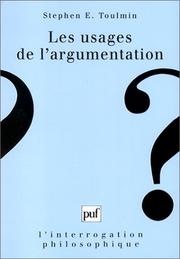 The uses of argumentStephen Edelston Toulmin · 1958
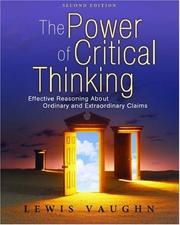 The Power of Critical ThinkingLewis Vaughn, Chris MacDonald · 2004
 Elements of ArgumentAnnette T. Rottenberg · 1985
 Amusing Ourselves to DeathNeil Postman, Neil Postman · 1985
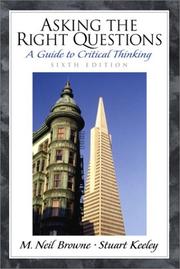 Asking the right questionsM. Neil Browne, Stuart Keeley · 1981
 Logic and contemporary rhetoricHoward Kahane, Nancy M. Cavender · 1971
 With good reasonS. Morris Engel · 1976
 Critical reasoningJ. B. Cederblom, Jerry Cederblom · 1982
Ranked by number of editions on Open Library, a rough measure of how lasting a book is.
🔗 Related topics
- Deductive reasoning Deductive reasoning is the process of drawing valid inferences. An inference is valid if its conclusion follows logically from its premises, meaning that…
- Logical reasoning Logical reasoning is a form of thinking or information processing that aims to arrive at a conclusion in a rigorous way. It happens in the form of inferences…
- Validity (logic) In logic, specifically in deductive reasoning, an argument is valid if and only if it takes a form that makes it impossible for the premises to be true…
- Formal fallacy In logic and philosophy, a formal fallacy is a pattern of reasoning with a flaw in its logical structure (the logical relationship between the premises…
- Inference Inferences are steps in logical reasoning, moving from premises to logical consequences. Inference is traditionally divided into deduction and induction…
- False dilemma A false dilemma, also referred to as false dichotomy or false binary, is an informal fallacy based on a premise that erroneously limits what options are…
- Logic Logic is the study of correct reasoning. It includes both formal and informal logic. Formal logic is the study of deductively valid inferences or logical…
- Soundness In logic, soundness can refer to either a property of arguments or a property of formal deductive systems. An argument is sound if (and only if) it is…