Everything about Inference
Steps in reasoning
Inferences are steps in logical reasoning, moving from premises to logical consequences. Inference is traditionally divided into deduction and induction, a distinction that dates at least to Aristotle. A third type of inference, abduction, has been proposed, notably by Charles Sanders Peirce. Deduction is inference deriving logical conclusions from premises known or assumed to be true, with the laws of valid inference being studied in logic. Induction is inference from particular evidence to a universal conclusion. Abduction seeks neither logical certainty nor a universal conclusion but a "best explanation" based on likelihood given the evidence. Wikipedia →
🧭 Start here: a 6-step reading path
- Read the overview: InferenceA 5-minute orientation
- Skim a recent paper: Enhancing Geometric Factors in Model Learning and Inference for Object Detection and Instance SegmentationInfluential work since 2022
- Pick up a classic book: Philosophische GrammatikThe most-reprinted book on the subject
- Read the landmark paper: DADA2: High-resolution sample inference from Illumina amplicon dataCited 35,275 times
- Go sideways: Deductive reasoningA closely related topic
- Go sideways: Logical reasoningA closely related topic
📖 Definitions
Noun The act or process of inferring by deduction or induction.
Noun That which is inferred; a truth or proposition drawn from another which is admitted or supposed to be true; a conclusion; a deduction.
Noun Output generated by a trained machine learning model as it applies learned patterns to new data.
Noun An instance or example of this, such as a prediction, classification, decision, etc.
🗂️ The subject at a glance
🏆 Landmark papers (most cited)
DADA2: High-resolution sample inference from Illumina amplicon data
MrBayes 3.2: Efficient Bayesian Phylogenetic Inference and Model Choice Across a Large Model Space
Inference of Population Structure Using Multilocus Genotype Data
MrBayes 3: Bayesian phylogenetic inference under mixed models
MRBAYES: Bayesian inference of phylogenetic trees
IQ-TREE 2: New Models and Efficient Methods for Phylogenetic Inference in the Genomic Era
Inference from Iterative Simulation Using Multiple Sequences
ANFIS: adaptive-network-based fuzzy inference system
🆕 Influential since 2022
Enhancing Geometric Factors in Model Learning and Inference for Object Detection and Instance Segmentation
SCENIC+: single-cell multiomic inference of enhancers and gene regulatory networks
Dissecting cell identity via network inference and in silico gene perturbation
Comparison of methods and resources for cell-cell communication inference from single-cell RNA-Seq data
Inference of CRISPR Edits from Sanger Trace Data
📚 Books worth reading
 Philosophische GrammatikLudwig Wittgenstein · 1960
 The Great Kapok TreeLynne Cherry · 1990
 The WallEve Bunting, Ronald Himler · 1990
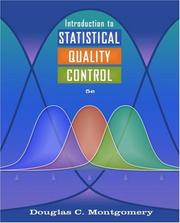 Introduction to Statistical Quality ControlDouglas C. Montgomery · 1985
 The Book of WhyJudea Pearl, Dana Mackenzie · 2018
 Probability TheoryE. T. Jaynes · 2003
 Applied nonparametric statisticsWayne W. Daniel · 1978
 Meaning and relevanceDeirdre Wilson · 2012
Ranked by number of editions on Open Library, a rough measure of how lasting a book is.
🔗 Related topics
- Deductive reasoning Deductive reasoning is the process of drawing valid inferences. An inference is valid if its conclusion follows logically from its premises, meaning that…
- Logical reasoning Logical reasoning is a form of thinking or information processing that aims to arrive at a conclusion in a rigorous way. It happens in the form of inferences…
- Argument An argument is one or more premises—sentences, statements, or propositions—directed towards arriving at a logical conclusion. The purpose of an argument…
- Inductive reasoning Inductive reasoning refers to a variety of methods of reasoning in which the conclusion of an argument is supported with some degree of probability, but…
- Logic and rationality As the study of argument is of clear importance to the reasons that we hold things to be true, logic is of essential importance to rationality. Arguments…
- Logic Logic is the study of correct reasoning. It includes both formal and informal logic. Formal logic is the study of deductively valid inferences or logical…
- Validity (logic) In logic, specifically in deductive reasoning, an argument is valid if and only if it takes a form that makes it impossible for the premises to be true…
- Psychology of reasoning The psychology of reasoning (also known as the cognitive science of reasoning) is the study of how people reason, often broadly defined as the process…