Live briefing
Everything about Semantic computing
Semantic computing is a field of computing that combines elements of semantic analysis, natural language processing, data mining, knowledge graphs, and related fields. Wikipedia →
🧭 Start here: a 6-step reading path
- Read the overview: Semantic computingA 5-minute orientation
- Skim a recent paper: Edge Learning for B5G Networks With Distributed Signal Processing: Semantic Communication, Edge Computing, and Wireless SensingInfluential work since 2022
- Pick up a classic book: Computational IntelligenceThe most-reprinted book on the subject
- Read the landmark paper: Computing Semantic Similarity of Concepts in Knowledge GraphsCited 184 times
- Go sideways: Phillip C.-Y. SheuA closely related topic
- Go sideways: Semantic technologyA closely related topic
📖 Definitions
No dictionary entry for this exact phrase.
🗂️ The subject at a glance
🏆 Landmark papers (most cited)
Computing Semantic Similarity of Concepts in Knowledge Graphs
Knowledge Derived From Wikipedia For Computing Semantic Relatedness
Semantic Web computing in industry
Building hypertext links by computing semantic similarity
Computing semantic relatedness using Wikipedia features
Semantic Modeling for Cloud Computing, Part 1
Computing inter-document similarity with Context Semantic Analysis
Computing semantic similarity based on novel models of semantic representation using Wikipedia
🆕 Influential since 2022
Edge Learning for B5G Networks With Distributed Signal Processing: Semantic Communication, Edge Computing, and Wireless Sensing
Online Resource Allocation for Semantic-Aware Edge Computing Systems
Swin Transformer-Based Dynamic Semantic Communication for Multi-User With Different Computing Capacity
Computing Networks Enabled Semantic Communications
Generative AI for Consumer Electronics: Enhancing User Experience With Cognitive and Semantic Computing
📚 Books worth reading
 Computational IntelligenceAndries P. Engelbrecht · 2002
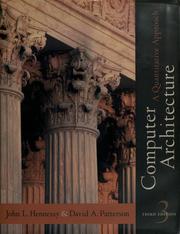 Computer architectureJohn L. Hennessy, David A. Patterson · 1989
 Applied Computer Sciences in EngineeringJuan Carlos Figueroa-García, Eduyn Ramiro López-Santana · 2017
 Artificial intelligence for gamesIan Millington · 2006
 Semantic structuresDavid L. Waltz · 1989
 The Elements of Statistical LearningTrevor Hastie, Robert Tibshirani · 2001
 Data miningI. H. Witten, Ian H. Witten · 1999
 Foundations of Semantic Web technologiesPascal Hitzler · 2009
Ranked by number of editions on Open Library, a rough measure of how lasting a book is.
🔗 Related topics
- Phillip C.-Y. Sheu Chen-Yu (Phillip) Sheu is a professor with joint appointments in electrical engineering, computer science and biomedical engineering at the University…
- Semantic technology The ultimate goal of semantic technology is to help machines understand data. Well-known technologies that enable the encoding of semantics in data include…
- Semantic Web The Semantic Web, sometimes known as Web 3.0, is an extension of the World Wide Web through standards set by the World Wide Web Consortium (W3C). The goal…
- Generative Problem Solving Generative Problem Solving (GPS) is an area of artificial intelligence that is concerned with the generation, representation, verification, and solution…
- Knowledge graph In knowledge representation and reasoning, a knowledge graph is a knowledge base that uses a graph-structured data model or topology to represent and operate…
- Amit Sheth Amit Sheth is an Indian computer scientist who works at University of South Carolina in Columbia, South Carolina. He holds the NCR Chair and is a Professor…
- Semantic query Semantic queries allow for queries and analytics of associative and contextual nature. Semantic queries enable the retrieval of both explicitly and implicitly…
- AllegroGraph AllegroGraph is a closed source triplestore which is designed to store RDF triples, a standard format for Linked Data. It also operates as a document store…