Live briefing

Everything about Semantic Web
Extension of the Web to facilitate data exchange
The Semantic Web, sometimes known as Web 3.0, is an extension of the World Wide Web through standards set by the World Wide Web Consortium (W3C). The goal of the Semantic Web is to make Internet data machine-readable. Wikipedia →
🧭 Start here: a 6-step reading path
- Read the overview: Semantic WebA 5-minute orientation
- Skim a recent paper: Knowledge-based semantic web technologies in the AEC sectorInfluential work since 2022
- Pick up a classic book: Foundations of Semantic Web technologiesThe most-reprinted book on the subject
- Read the landmark paper: The Semantic WebCited 8,734 times
- Go sideways: Web Ontology LanguageA closely related topic
- Go sideways: Semantic Web StackA closely related topic
📖 Definitions
Proper noun Alternative letter-case form of Semantic Web.
🏆 Landmark papers (most cited)
The Semantic Web
Semantic Web services
The Semantic Web Revisited
Semantic Sensor Web
Composing Web services on the Semantic Web
Semantic Web Mining
Autonomous semantic web services
A reasonable Semantic Web
🆕 Influential since 2022
Knowledge-based semantic web technologies in the AEC sector
The Intersection Between Semantic Web and Materials Science
A semantic web technology index
Semantic web and machine learning techniques addressing semantic interoperability in Industry 4.0
A Semantic Web Approach to Fault Tolerant Autonomous Manufacturing
📚 Books worth reading
 Foundations of Semantic Web technologiesPascal Hitzler · 2009
 Knitting the Semantic WebJane Greenberg · 2007
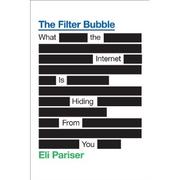 The Filter BubbleEli Pariser · 2011
 The Semantic WebAldo Gangemi, Roberto Navigli · 2017
 Intelligent technologies for web applicationsPriti Srinivas Sajja · 2012
- 📕SMAP 2007International Workshop on Semantic Media Adaption and Personalization (2nd 2007 London, England) · 2007
 The Semantic WebBo Leuf · 2005
 Semantic Web ProgrammingJohn Hebeler · 2009
Ranked by number of editions on Open Library, a rough measure of how lasting a book is.
🔗 Related topics
- Web Ontology Language The Web Ontology Language (OWL) is a family of knowledge representation languages for authoring ontologies. Ontologies are a formal way to describe taxonomies…
- Semantic Web Stack The Semantic Web Stack, also known as Semantic Web Cake or Semantic Web Layer Cake, illustrates the architecture of the Semantic Web. The Semantic Web…
- Semantic technology The ultimate goal of semantic technology is to help machines understand data. Well-known technologies that enable the encoding of semantics in data include…
- DARPA Agent Markup Language The DARPA Agent Markup Language (DAML) was the name of a US funding program at the US Defense Advanced Research Projects Agency (DARPA) started in 1999…
- RDFa RDFa or Resource Description Framework in Attributes is a W3C Recommendation that adds a set of attribute-level extensions to HTML, XHTML and various XML-based…
- RDF Schema RDF Schema (Resource Description Framework Schema, variously abbreviated as RDFS, RDF(S), RDF-S, or RDF/S) is a set of classes with certain properties…
- Resource Description Framework The Resource Description Framework (RDF) is a method to describe and exchange graph data. It was originally designed as a data model for metadata by the…
- RDF query language An RDF query language is a computer language, specifically a query language for databases, able to retrieve and manipulate data stored in Resource Description…