Live briefing
Everything about RDF Schema
Schema for knowledge representation
RDF Schema (Resource Description Framework Schema, variously abbreviated as RDFS, RDF(S), RDF-S, or RDF/S) is a set of classes with certain properties using the RDF extensible knowledge representation data model, providing basic elements for the description of ontologies. It uses various forms of RDF vocabularies, intended to structure RDF resources. RDF and RDFS can be saved in a triplestore, then one can extract some knowledge from them using a query language, like SPARQL. Wikipedia →
🧭 Start here: a 6-step reading path
- Read the overview: RDF SchemaA 5-minute orientation
- Skim a recent paper: Inference-based schema discovery for RDF dataInfluential work since 2022
- Pick up a classic book: Statistical Atlases and Computational Models of the Heart. Imaging and Modelling ChallengesThe most-reprinted book on the subject
- Read the landmark paper: Completeness, decidability and complexity of entailment for RDF Schema and a semantic extension involving the OWL vocabularyCited 220 times
- Go sideways: Resource Description FrameworkA closely related topic
- Go sideways: SPARQLA closely related topic
📖 Definitions
No dictionary entry for this exact phrase.
🗂️ The subject at a glance
🏆 Landmark papers (most cited)
Completeness, decidability and complexity of entailment for RDF Schema and a semantic extension involving the OWL vocabulary
Design issues and challenges for RDF- and schema-based peer-to-peer systems
An unsupervised instance matcher for schema-free RDF data
Enabling knowledge representation on the Web by extending RDF Schema
Integrating ontologies and thesauri for RDF schema creation and metadata querying
Relational schema optimization for RDF-based knowledge graphs
A Novel Framework for RDF Schema Extraction in NoSQL Databases Using Sentence-BERT
A descriptive type foundation for RDF Schema
🆕 Influential since 2022
📚 Books worth reading
 Statistical Atlases and Computational Models of the Heart. Imaging and Modelling ChallengesOscar Camara · 2012
 Semantic Web and Web ScienceJuanzi Li · 2013
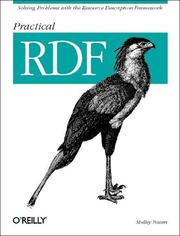 Practical RDFShelley Powers · 2003
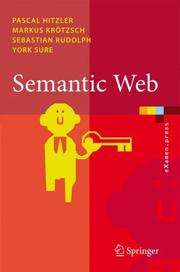 Semantic WebPascal Hitzler, Markus Krötzsch · 2007
 Semantic TechnologyHideaki Takeda · 2013
 Advances in Conceptual ModelingSilvana Castano · 2012
 Working with MediaWikiYaron Koren · 2012
 Rdf SpecificationsDan Brickley, World Wide Web Consortium · 2000
Ranked by number of editions on Open Library, a rough measure of how lasting a book is.
🔗 Related topics
- Resource Description Framework The Resource Description Framework (RDF) is a method to describe and exchange graph data. It was originally designed as a data model for metadata by the…
- SPARQL SPARQL (pronounced "sparkle", a recursive acronym for SPARQL Protocol and RDF Query Language) is an RDF query language—that is, a semantic query language…
- Metaclass (knowledge representation) In knowledge representation, particularly in the Semantic Web, a metaclass is a class whose instances can themselves be classes. Similar to their role…
- RDFa RDFa or Resource Description Framework in Attributes is a W3C Recommendation that adds a set of attribute-level extensions to HTML, XHTML and various XML-based…
- Semantic Web The Semantic Web, sometimes known as Web 3.0, is an extension of the World Wide Web through standards set by the World Wide Web Consortium (W3C). The goal…
- Blank node In RDF, a blank node (also called bnode) is a node in an RDF graph representing a resource for which a URI or literal is not given. The resource represented…
- Geopolitical ontology The FAO geopolitical ontology is an ontology developed by the Food and Agriculture Organization of the United Nations (FAO) to describe, manage and exchange…
- N-Triples N-Triples is a format for storing and transmitting data. It is a line-based, plain text serialisation format for RDF (Resource Description Framework) graphs…