Live briefing

Everything about Semantic technology
Technology to help machines understand data
The ultimate goal of semantic technology is to help machines understand data. Well-known technologies that enable the encoding of semantics in data include the Resource Description Framework (RDF) and the Web Ontology Language (OWL). These technologies formally represent the meaning involved in information. For example, ontology can describe concepts, relationships between things, and categories of things. Embedding semantics in data offers significant advantages, such as enabling reasoning over data and dealing with heterogeneous data sources. Wikipedia →
🧭 Start here: a 6-step reading path
- Read the overview: Semantic technologyA 5-minute orientation
- Skim a recent paper: Review the state-of-the-art technologies of semantic segmentation based on deep learningInfluential work since 2022
- Pick up a classic book: Advances in Knowledge Discovery and ManagementThe most-reprinted book on the subject
- Read the landmark paper: TechNet: Technology semantic network based on patent dataCited 162 times
- Go sideways: Semantic WebA closely related topic
- Go sideways: Semantic layerA closely related topic
📖 Definitions
No dictionary entry for this exact phrase.
🗂️ The subject at a glance
🏆 Landmark papers (most cited)
TechNet: Technology semantic network based on patent data
A survey of semantic web technology for agriculture
Semantic Technology and Anthropomorphism
Idea generation with Technology Semantic Network
DESIGN KNOWLEDGE REPRESENTATION WITH TECHNOLOGY SEMANTIC NETWORK
Integrating Technology-Relationship-Technology Semantic Analysis and Technology Roadmapping Method: A Case of Elderly Smart Wear Technology
Enabling Semantic Technology Empowered Smart Spaces
Aggregation of bioinformatics data using Semantic Web technology
🆕 Influential since 2022
Review the state-of-the-art technologies of semantic segmentation based on deep learning
Technology opportunity analysis using hierarchical semantic networks and dual link prediction
A pointer meter reading recognition method based on YOLOX and semantic segmentation technology
Technological trend mining: identifying new technology opportunities using patent semantic analysis
Semantic TRIZ feasibility in technology development, innovation, and production: A systematic review
📚 Books worth reading
 Advances in Knowledge Discovery and ManagementFabrice Guillet · 2011
 Spoken Language UnderstandingGokhan Tur, Renato De Mori · 2011
 Semantic Multimedia Analysis and ProcessingEvaggelos Spyrou, Dimitrios Iakovidis · 2014
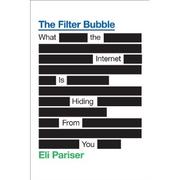 The Filter BubbleEli Pariser · 2011
- 📕From semantics to computer scienceGilles Kahn, Yves Bertot · 2009
 The Semantic WebBo Leuf · 2005
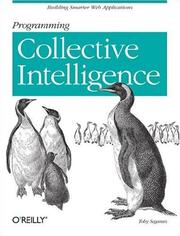 Programming Collective IntelligenceToby Segaran · 2007
 Army of nonePaul Scharre · 2018
Ranked by number of editions on Open Library, a rough measure of how lasting a book is.
🔗 Related topics
- Semantic Web The Semantic Web, sometimes known as Web 3.0, is an extension of the World Wide Web through standards set by the World Wide Web Consortium (W3C). The goal…
- Semantic layer A semantic layer is a business representation of corporate data that helps end users access data autonomously using common business terms managed through…
- Resource Description Framework The Resource Description Framework (RDF) is a method to describe and exchange graph data. It was originally designed as a data model for metadata by the…
- Semantic Web Stack The Semantic Web Stack, also known as Semantic Web Cake or Semantic Web Layer Cake, illustrates the architecture of the Semantic Web. The Semantic Web…
- Web Ontology Language The Web Ontology Language (OWL) is a family of knowledge representation languages for authoring ontologies. Ontologies are a formal way to describe taxonomies…
- RDFa RDFa or Resource Description Framework in Attributes is a W3C Recommendation that adds a set of attribute-level extensions to HTML, XHTML and various XML-based…
- Semantic query Semantic queries allow for queries and analytics of associative and contextual nature. Semantic queries enable the retrieval of both explicitly and implicitly…
- Simple Knowledge Organization System Simple Knowledge Organization System (SKOS) is a W3C recommendation designed for representation of thesauri, classification schemes, taxonomies, subject-heading…