Live briefing
Everything about Semantic query
Aspect of information processing
Semantic queries allow for queries and analytics of associative and contextual nature. Semantic queries enable the retrieval of both explicitly and implicitly derived information based on syntactic, semantic and structural information contained in data. They are designed to deliver precise results or to answer more fuzzy and wide open questions through pattern matching and digital reasoning. Wikipedia →
🧭 Start here: a 6-step reading path
- Read the overview: Semantic queryA 5-minute orientation
- Skim a recent paper: Mask2Former with Improved Query for Semantic Segmentation in Remote-Sensing ImagesInfluential work since 2022
- Pick up a classic book: Learning SPARQLThe most-reprinted book on the subject
- Read the landmark paper: The CQL continuous query language: semantic foundations and query executionCited 789 times
- Go sideways: GeoSPARQLA closely related topic
- Go sideways: RDF query languageA closely related topic
📖 Definitions
No dictionary entry for this exact phrase.
🗂️ The subject at a glance
🏆 Landmark papers (most cited)
The CQL continuous query language: semantic foundations and query execution
Logic-based approach to semantic query optimization
Bridging the Gap: Query by Semantic Example
Semantic caching and query processing
From keywords to semantic queries—Incremental query construction on the semantic web
Semantic query caching in a mobile environment
Social semantic query expansion
Automatic query expansion via lexical-semantic relationships
🆕 Influential since 2022
Mask2Former with Improved Query for Semantic Segmentation in Remote-Sensing Images
Prototype as query for few shot semantic segmentation
Leveraging semantic saliency maps for query-specific video summarization
Semantic Relevance Learning for Video-Query Based Video Moment Retrieval
Query-support semantic correlation mining for few-shot segmentation
📚 Books worth reading
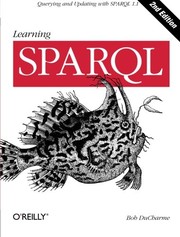 Learning SPARQLBob DuCharme · 2011
 Reasoning webFrançois Bry, Pedro Barahona · 2006
 Knowledge management & intelligent enterprisesIFIP WG 2.6 Working Conference on Data Semantics (9th 2001 Hong Kong, China), FONG J · 2000
- 📕Context-aware semantics-based information retrievalCarsten Kessler · 2010
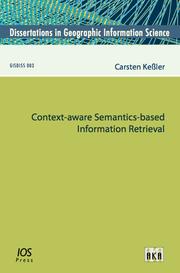 Context-aware Semantics-based Information RetrievalCarsten Keßler · 2010
 The Semantic WebAsian Semantic Web Conference (4th 2009 Shanghai, China) · 2010
 Reasoning webSummer School on Reasoning Web (1st 2005 Msida, Malta) · 2005
 Reasoning webSummer School on Reasoning Web (1st 2005 Msida, Malta) · 2005
Ranked by number of editions on Open Library, a rough measure of how lasting a book is.
🔗 Related topics
- GeoSPARQL GeoSPARQL is a model for representing and querying geospatial linked data for the Semantic Web. It is standardized by the Open Geospatial Consortium as…
- RDF query language An RDF query language is a computer language, specifically a query language for databases, able to retrieve and manipulate data stored in Resource Description…
- Triplestore A triplestore or RDF store is a purpose-built database for the storage and retrieval of triples through semantic queries. A triple is a data entity composed…
- Oracle Spatial and Graph Oracle Spatial and Graph, formerly Oracle Spatial, is a free option component of the Oracle Database. The spatial features in Oracle Spatial and Graph…
- Semantic integration Semantic integration is the process of interrelating information from diverse sources, for example calendars and to do lists, email archives, presence…
- Semantic Web The Semantic Web, sometimes known as Web 3.0, is an extension of the World Wide Web through standards set by the World Wide Web Consortium (W3C). The goal…
- AllegroGraph AllegroGraph is a closed source triplestore which is designed to store RDF triples, a standard format for Linked Data. It also operates as a document store…
- Graph database A graph database (GDB) is a database that uses graph structures for semantic queries with nodes, edges, and properties to represent and store data. A key…