Live briefing
Everything about Processor sharing
Form of resource sharing for tasks in computing
Processor sharing or egalitarian processor sharing is a service policy where the customers, clients or jobs are all served simultaneously, each receiving an equal fraction of the service capacity available. In such a system all jobs start service immediately. Wikipedia →
🧭 Start here: a 6-step reading path
- Read the overview: Processor sharingA 5-minute orientation
- Skim a recent paper: Priority queueing system with many types of requests and restricted processor sharingInfluential work since 2022
- Pick up a classic book: Modern Operating SystemsThe most-reprinted book on the subject
- Read the landmark paper: A generalized processor sharing approach to flow control in integrated services networks: the single-node caseCited 2,204 times
- Go sideways: Generalized processor sharingA closely related topic
- Go sideways: Weighted fair queueingA closely related topic
📖 Definitions
No dictionary entry for this exact phrase.
🗂️ The subject at a glance
🏆 Landmark papers (most cited)
A generalized processor sharing approach to flow control in integrated services networks: the single-node case
Waiting Time Distributions for Processor-Sharing Systems
Sharing a Processor Among Many Job Classes
Processor-sharing queues: Some progress in analysis
Insensitivity in processor-sharing networks
A survey on discriminatory processor sharing
Individual Equilibrium and Learning in Processor Sharing Systems
Processor sharing: A survey of the mathematical theory
🆕 Influential since 2022
Priority queueing system with many types of requests and restricted processor sharing
Queueing system with batch arrival of heterogeneous orders, flexible limited processor sharing and dynamical change of priorities
Approximations and Optimal Control for State-Dependent Limited Processor Sharing Queues
Improving the Mean-Field Fluid Model of Processor Sharing Queueing Networks for Dynamic Performance Models in Cloud Computing
Efficient and accurate Lyapunov function-based truncation technique for multi-dimensional Markov chains with applications to discriminatory processor sharing and priority queues
📚 Books worth reading
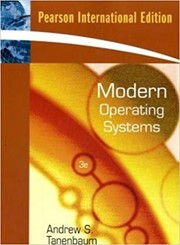 Modern Operating SystemsAndrew S. Tanenbaum, Herbert Bos · 1992
 Computer Engineering and TechnologyWeixia Xu · 2013
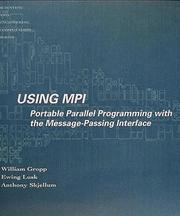 Using MPIWilliam Gropp, Ewing Lusk · 1994
 Hands-on networking with Internet technologiesDouglas E. Comer, Douglas E Comer · 2002
 English for computer scienceNorma D. Mullen, P. Charles Brown · 1983
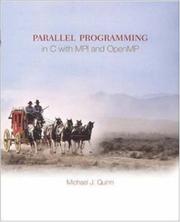 Parallel Programming in C with MPI and OpenMPMichael J. Quinn · 2003
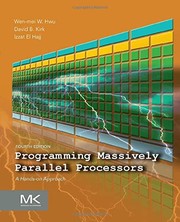 Programming Massively Parallel ProcessorsDavid Kirk, Wen-Mei W. Hwu · 2010
 Scientific programming and computer architectureDivakar Viswanath · 2017
Ranked by number of editions on Open Library, a rough measure of how lasting a book is.
🔗 Related topics
- Generalized processor sharing Generalized processor sharing (GPS) is an ideal scheduling algorithm for process schedulers and network schedulers. It is related to the fair-queuing principle…
- Weighted fair queueing Weighted fair queueing (WFQ) is a network scheduling algorithm. WFQ is both a packet-based implementation of the generalized processor sharing (GPS) policy…
- M/G/1 queue In queueing theory, a discipline within the mathematical theory of probability, an M/G/1 queue is a queue model where arrivals are Markovian (modulated…
- Deficit round robin Deficit round robin (DRR), also deficit-weighted round robin (DWRR), is a scheduling algorithm for the network scheduler. DRR is, similar to weighted fair…
- Scheduling (computing) In computing, scheduling is the action of assigning resources to perform tasks. The resources may be processors, network links or expansion cards. The…
- Fair queuing Fair queuing is a family of scheduling algorithms used in some process and network schedulers. The algorithm is designed to achieve fairness when a limited…
- Priority queue In computer science, a priority queue is an abstract data type similar to a regular queue where each element has an associated priority determining its…
- Queueing theory Queueing theory is the mathematical study of queues, or waiting lines. A queueing model is constructed so that queue lengths and waiting times can be predicted…