Live briefing
Everything about Generalized processor sharing
Generalized processor sharing (GPS) is an ideal scheduling algorithm for process schedulers and network schedulers. It is related to the fair-queuing principle which groups packets into classes and shares the service capacity between them. GPS shares this capacity according to some fixed weights. Wikipedia →
🧭 Start here: a 6-step reading path
- Read the overview: Generalized processor sharingA 5-minute orientation
- Pick up a classic book: Modern Operating SystemsThe most-reprinted book on the subject
- Read the landmark paper: The multiple phase service network with generalized processor sharingCited 157 times
- Go sideways: Weighted fair queueingA closely related topic
- Go sideways: Fair queuingA closely related topic
📖 Definitions
No dictionary entry for this exact phrase.
🗂️ The subject at a glance
🏆 Landmark papers (most cited)
The multiple phase service network with generalized processor sharing
Statistical analysis of the generalized processor sharing scheduling discipline
Generalized processor sharing with light-tailed and heavy-tailed input
Fluid and heavy traffic diffusion limits for a generalized processor sharing model
Large deviations analysis of the generalized processor sharing policy
Analysis of generalized processor-sharing systems with two classes of customers and exponential services
Power series approximations for two-class generalized processor sharing systems
Bandwidth allocation for multiple qualities of service using generalized processor sharing
📚 Books worth reading
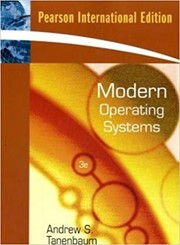 Modern Operating SystemsAndrew S. Tanenbaum, Herbert Bos · 1992
 Computer Engineering and TechnologyWeixia Xu · 2013
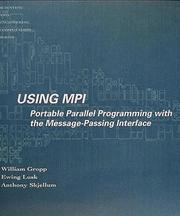 Using MPIWilliam Gropp, Ewing Lusk · 1994
 Statistical Atlases and Computational Models of the Heart. Imaging and Modelling ChallengesOscar Camara · 2012
 Home recording for musicians for dummiesJeff Strong · 2005
 English for computer scienceNorma D. Mullen, P. Charles Brown · 1983
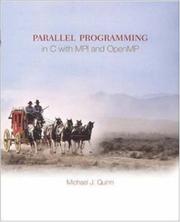 Parallel Programming in C with MPI and OpenMPMichael J. Quinn · 2003
 Digital planetGeorge Beekman, Ben Beekman · 2011
Ranked by number of editions on Open Library, a rough measure of how lasting a book is.
🔗 Related topics
- Weighted fair queueing Weighted fair queueing (WFQ) is a network scheduling algorithm. WFQ is both a packet-based implementation of the generalized processor sharing (GPS) policy…
- Fair queuing Fair queuing is a family of scheduling algorithms used in some process and network schedulers. The algorithm is designed to achieve fairness when a limited…
- Deficit round robin Deficit round robin (DRR), also deficit-weighted round robin (DWRR), is a scheduling algorithm for the network scheduler. DRR is, similar to weighted fair…
- Weighted round robin Weighted round robin (WRR) is a network scheduler for data flows, but also used to schedule processes. Weighted round robin is a generalisation of round-robin…
- Processor sharing Processor sharing or egalitarian processor sharing is a service policy where the customers, clients or jobs are all served simultaneously, each receiving…
- Bandwidth management Bandwidth management is the process of measuring and controlling the communications (traffic, packets) on a network link, to avoid filling the link to…
- Network congestion Network congestion in computer networking and queueing theory is the reduced quality of service that occurs when a network node or link is carrying or…
- Round-robin scheduling Round-robin (RR) is one of the algorithms employed by process and network schedulers in computing. As the term is generally used, time slices (also known…