Live briefing

Everything about Queueing theory
Mathematical study of waiting lines, or queues
Queueing theory is the mathematical study of queues, or waiting lines. A queueing model is constructed so that queue lengths and waiting times can be predicted. Queueing theory is generally considered a branch of operations research because the results are often used when making business decisions about the resources needed to provide a service. Wikipedia →
🧭 Start here: a 6-step reading path
- Read the overview: Queueing theoryA 5-minute orientation
- Skim a recent paper: Planning of electric vehicle charging stations: An integrated deep learning and queueing theory approachInfluential work since 2022
- Pick up a classic book: Computer NetworksThe most-reprinted book on the subject
- Read the landmark paper: Robust Queueing TheoryCited 64 times
- Go sideways: M/M/1 queueA closely related topic
- Go sideways: Pollaczek–Khinchine formulaA closely related topic
📖 Definitions
Noun The study of the behaviour of queues, and of stochastic processes on which they are modelled.
🗂️ The subject at a glance
🏆 Landmark papers (most cited)
Robust Queueing Theory
Elementary queueing theory based on possibility theory
FUZZY QUEUEING THEORY REVISITED
Sixty Years of Queueing Theory
The Value of Queueing Theory
Queueing Theory in Practice
Queueing Systems Volume 1: Theory.
Is queueing theory dead?
🆕 Influential since 2022
Planning of electric vehicle charging stations: An integrated deep learning and queueing theory approach
Queueing theory model of pentose phosphate pathway
Performance Analysis in Satellite Communication With Beam Hopping Using Discrete-Time Queueing Theory
Solving stochastic gene-expression models using queueing theory: A tutorial review
Modeling taxi drivers’ decisions at airport based on queueing theory
📚 Books worth reading
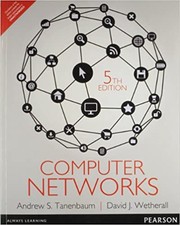 Computer NetworksAndrew S. Tanenbaum, John David Wetherall · 1981
 Introduction to queueing theoryRobert B. Cooper · 1972
- 📕Discrete-event simulation of fluid stochastic Petri netsGianfranco Ciardo · 1997
 Advanced mathematics for engineers with applications in stochastic processesAliakbar Montazer Haghighi, Jian-ao Lian · 2009
- 📕A report on Stochastic Fairness Queueing (SFQ) experimentsBarbara A. Denny · 1993
 Pro MSMQArohi Redkar, Scot Boyd · 2004
 Frontiers in QueueingJewgeni H. Dshalalow · 1996
 Advanced message applications with MSMQ and MQSeriesRhys Lewis · 1999
Ranked by number of editions on Open Library, a rough measure of how lasting a book is.
🔗 Related topics
- M/M/1 queue In queueing theory, a discipline within the mathematical theory of probability, an M/M/1 queue represents the queue length in a system having a single…
- Pollaczek–Khinchine formula In queueing theory, a discipline within the mathematical theory of probability, the Pollaczek–Khinchine formula states a relationship between the queue…
- M/M/∞ queue In queueing theory, a discipline within the mathematical theory of probability, the M/M/∞ queue is a multi-server queueing model where every arrival experiences…
- M/D/1 queue In queueing theory, a discipline within the mathematical theory of probability, an M/D/1 queue represents the queue length in a system having a single…
- M/M/c queue In queueing theory, a discipline within the mathematical theory of probability, the M/M/c queue (or Erlang–C model) is a multi-server queueing model. In…
- Erlang (unit) The erlang (symbol E) is a dimensionless unit that is used in telephony as a measure of offered load or carried load on service-providing elements such…
- M/D/c queue In queueing theory, a discipline within the mathematical theory of probability, an M/D/c queue represents the queue length in a system having c servers…
- G-network In queueing theory, a discipline within the mathematical theory of probability, a G-network (generalized queueing network, often called a Gelenbe network)…