Live briefing

Everything about Problem-based learning
Learner-centric pedagogy
Problem-based learning (PBL) is a teaching method in which students aim to learn about a subject through the experience of solving an open-ended problem found in trigger material. The PBL process does not focus on problem solving with a defined solution, but is designed for the development of other skills and attributes. This includes knowledge acquisition, enhanced group collaboration and communication. Wikipedia →
🧭 Start here: a 6-step reading path
- Read the overview: Problem-based learningA 5-minute orientation
- Skim a recent paper: Problem-Based Learning – An OverviewInfluential work since 2022
- Pick up a classic book: Experience and educationThe most-reprinted book on the subject
- Read the landmark paper: Problem based learningCited 824 times
- Go sideways: Discovery learningA closely related topic
- Go sideways: Worked-example effectA closely related topic
📖 Definitions
No dictionary entry for this exact phrase.
🏆 Landmark papers (most cited)
Problem based learning
Problem-based learning
Problem‐based learning
Problem-based learning
Problem based learning
Case-based, problem-based learning
Problem-Based Learning
Problem-based learning
🆕 Influential since 2022
📚 Books worth reading
 Experience and educationJohn Dewey · 1938
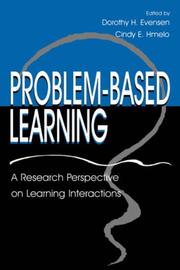 Problem-based learningDorothy H. Evensen · 2000
 Practicing the Art of LeadershipReginald Leon Green · 2000
 A handbook of reflective and experiential learningJennifer A. Moon · 2004
 Human Genetics and GenomicsBruce R. Korf · 2006
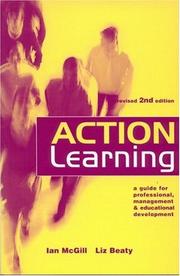 Action learningIan McGill · 1992
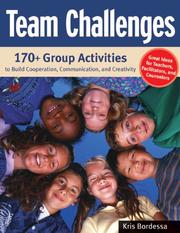 Team challengesKris Bordessa · 2005
- 📕Understanding Applied LearningTanya Ovenden-Hope, Sonia Blandford · 2017
Ranked by number of editions on Open Library, a rough measure of how lasting a book is.
🔗 Related topics
- Discovery learning Discovery learning is a technique of inquiry-based learning and is considered a constructivist-based approach to education. It is also referred to as problem-ba…
- Worked-example effect The worked-example effect is a learning effect predicted by cognitive load theory.[full citation needed] Specifically, it refers to improved learning observed…
- Instructional scaffolding Instructional scaffolding is the support given to a student by an instructor throughout the learning process. This support is specifically tailored to…
- Constructivist teaching methods Constructivist teaching is based on constructivism. It rests on the belief that learning occurs as learners are actively involved in a process of meaning…
- Constructivism (philosophy of education) Constructivism is a theory that suggests that learners do not passively acquire knowledge through direct instruction. Instead, they construct their understandin…
- Active learning Active learning is "a method of learning in which students are actively or experientially involved in the learning process and where there are different…
- Team-based learning Team-based learning (TBL) is a collaborative learning and teaching strategy that enables people to follow a structured process to enhance student engagement…
- Meaningful learning Meaningful learning refers to the act of higher order thinking and development through intellectual engagement that uses pattern recognition and concept…