Live briefing

Everything about Discovery learning
Technique of inquiry-based learning
Discovery learning is a technique of inquiry-based learning and is considered a constructivist-based approach to education. It is also referred to as problem-based learning, experiential learning, and 21st-century learning. It is supported by the work of learning theorists and psychologists Jean Piaget, Jerome Bruner, and Seymour Papert. Wikipedia →
🧭 Start here: a 6-step reading path
- Read the overview: Discovery learningA 5-minute orientation
- Skim a recent paper: Scaling deep learning for materials discoveryInfluential work since 2022
- Pick up a classic book: The Phantom TollboothThe most-reprinted book on the subject
- Read the landmark paper: Deep Learning in Drug DiscoveryCited 655 times
- Go sideways: Constructivism (philosophy of education)A closely related topic
- Go sideways: Instructional scaffoldingA closely related topic
📖 Definitions
No dictionary entry for this exact phrase.
🏆 Landmark papers (most cited)
Deep Learning in Drug Discovery
Feature Discovery by Competitive Learning*
Transfer Learning for Drug Discovery
Learning atoms for materials discovery
Machine learning for chemical discovery
Discovery Learning and Discovery Teaching
Machine Learning in Drug Discovery
Learning by Discovery
🆕 Influential since 2022
📚 Books worth reading
 The Phantom TollboothNorton Juster · 1961
 Developing play for the under 3sAnita M. Hughes · 2010
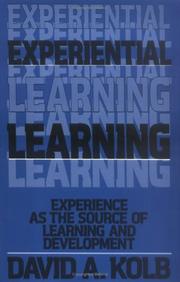 Experiential LearningDavid A. Kolb, David A. Kolb · 1983
 Learning by discoveryLee S. Shulman · 1966
 Discovery-Based Learning in the Life SciencesKathleen M. Susman · 2015
 Teaching for creative endeavorWilliam Burton Michael · 1968
 Learning by experience--what, why, howMorris T. Keeton · 1978
- 📕Team based action researchLen Browning · 1975
Ranked by number of editions on Open Library, a rough measure of how lasting a book is.
🔗 Related topics
- Constructivism (philosophy of education) Constructivism is a theory that suggests that learners do not passively acquire knowledge through direct instruction. Instead, they construct their understandin…
- Instructional scaffolding Instructional scaffolding is the support given to a student by an instructor throughout the learning process. This support is specifically tailored to…
- Constructivist teaching methods Constructivist teaching is based on constructivism. It rests on the belief that learning occurs as learners are actively involved in a process of meaning…
- Problem-based learning Problem-based learning (PBL) is a teaching method in which students aim to learn about a subject through the experience of solving an open-ended problem…
- Inquiry-based learning Inquiry-based learning (also spelled as enquiry-based learning in British English) is a form of active learning that starts by posing questions, problems…
- Worked-example effect The worked-example effect is a learning effect predicted by cognitive load theory.[full citation needed] Specifically, it refers to improved learning observed…
- Robert J. Marzano Robert J. Marzano is an educational researcher in the United States. He has done educational research and theory on the topics of standards-based assessment…
- Expertise reversal effect The expertise reversal effect refers to the reversal of the effectiveness of instructional techniques on learners with differing levels of prior knowledge…