Everything about Pearson correlation coefficient
Measure of linear correlation

In statistics, the Pearson correlation coefficient (PCC), also known as Pearson's r, the Pearson product-moment correlation coefficient (PPMCC), or simply the unqualified correlation coefficient, is a correlation coefficient that measures linear correlation between two sets of data. It is the ratio between the covariance of two variables and the product of their standard deviations; thus, it is essentially a normalized measurement of the covariance, such that the result always has a value between −1 and 1. A key difference is that unlike covariance, this correlation coefficient does not have units, allowing comparison of the strength of the joint association between different pairs of random variables that do not necessarily have the same units. As with covariance itself, the measure can only reflect a linear correlation of variables, and ignores many other types of relationships or correlations. As a simple example, one would expect the age and height of a sample of children from a school to have a Pearson correlation coefficient significantly greater than 0, but less than 1. Wikipedia →
🧭 Start here: a 6-step reading path
- Read the overview: Pearson correlation coefficientA 5-minute orientation
- Skim a recent paper: A new filter feature selection algorithm for classification task by ensembling pearson correlation coefficient and mutual informationInfluential work since 2022
- Pick up a classic book: Understanding Research MethodsThe most-reprinted book on the subject
- Read the landmark paper: Quantifying colocalization by correlation: The Pearson correlation coefficient is superior to the Mander's overlap coefficientCited 1,004 times
- Go sideways: CorrelationA closely related topic
- Go sideways: Partial correlationA closely related topic
📖 Definitions
No dictionary entry for this exact phrase.
🏆 Landmark papers (most cited)
Quantifying colocalization by correlation: The Pearson correlation coefficient is superior to the Mander's overlap coefficient
On the Importance of the Pearson Correlation Coefficient in Noise Reduction
A new sampling method in particle filter based on Pearson correlation coefficient
Daily Activity Feature Selection in Smart Homes Based on Pearson Correlation Coefficient
A new correlation coefficient between categorical, ordinal and interval variables with Pearson characteristics
Complex Pearson Correlation Coefficient for EEG Connectivity Analysis
Correlation Between Posttraumatic Growth and Posttraumatic Stress Disorder Symptoms Based on Pearson Correlation Coefficient
A weighted Pearson correlation coefficient based multi-fault comprehensive diagnosis for battery circuits
🆕 Influential since 2022
A new filter feature selection algorithm for classification task by ensembling pearson correlation coefficient and mutual information
Performance prediction of 2D vertically stacked MoS2-WS2 heterostructures base on first-principles theory and Pearson correlation coefficient
Regression models of Pearson correlation coefficient
Pearson Correlation Coefficient-Based Performance Enhancement of Broad Learning System for Stock Price Prediction
Image encoding selection based on Pearson correlation coefficient for time series anomaly detection
📚 Books worth reading
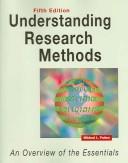 Understanding Research MethodsMildred L. Patten · 1996
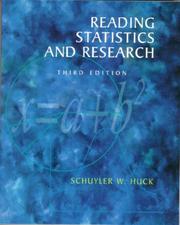 Reading statistics and researchSchuyler W. Huck · 1974
 Learning to use statistical tests in psychologyJudith Greene, Manuela D'Oliveira · 1982
 Introduction to SPSS in psychologyDennis Howitt, Duncan Cramer · 1997
 SPSS BasicsZealure C. Holcomb · 2006
 Statistics for nursing and allied healthStacey Beth Plichta · 2009
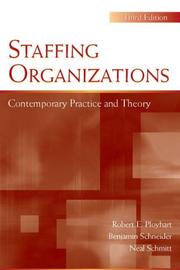 Staffing organizationsRobert E. Ployhart, Benjamin Schneider · 2005
- 📕The affinities of nationsHanna Newcombe · 1979
Ranked by number of editions on Open Library, a rough measure of how lasting a book is.
🔗 Related topics
- Correlation In statistics, correlation is a type of statistical relationship between two random variables or bivariate data. It usually refers to the extent to which…
- Partial correlation In probability theory and statistics, partial correlation measures the degree of association between two random variables, with the effect of a set of…
- Simple linear regression In statistics, simple linear regression (SLR) is a linear regression model with a single explanatory variable. That is, it concerns two-dimensional sample…
- Fisher transformation In statistics, the Fisher transformation (or Fisher z-transformation) of a Pearson correlation coefficient is its inverse hyperbolic tangent (artanh).…
- Spearman's rank correlation coefficient In statistics, Spearman's rank correlation coefficient or Spearman's ρ is a number ranging from −1 to 1 that indicates how strongly two sets of ranks are…
- Covariance In probability theory and statistics, covariance is a measure of the joint variability of two random variables. The sign of the covariance shows the tendency…
- Multivariate normal distribution In probability theory and statistics, the multivariate normal distribution, multivariate Gaussian distribution, or joint normal distribution is a generalization…
- Variance In probability theory and statistics, variance is a measure of dispersion, meaning it is a measure of how far a set of numbers are spread out from their…