Everything about Correlation
Statistical relationship

In statistics, correlation is a type of statistical relationship between two random variables or bivariate data. It usually refers to the extent to which a pair of quantities are linearly related. More generally, an arbitrary relationship between variables is called an association, meaning the degree to which the variability in one can be accounted for by the other. Wikipedia →
🧭 Start here: a 6-step reading path
- Read the overview: CorrelationA 5-minute orientation
- Skim a recent paper: The Matthews correlation coefficient (MCC) should replace the ROC AUC as the standard metric for assessing binary classificationInfluential work since 2022
- Pick up a classic book: Houghton Mifflin Science CaliforniaThe most-reprinted book on the subject
- Read the landmark paper: Development of the Colle-Salvetti correlation-energy formula into a functional of the electron densityCited 97,697 times
- Go sideways: Pearson correlation coefficientA closely related topic
- Go sideways: CovarianceA closely related topic
📖 Definitions
Noun A reciprocal, parallel or complementary relationship between two or more comparable objects.
Noun One of the several measures of the linear statistical relationship between two random variables, indicating both the strength and direction of the relationship.
Noun An isomorphism from a projective space to the dual of a projective space, often to the dual of itself.
🏆 Landmark papers (most cited)
Development of the Colle-Salvetti correlation-energy formula into a functional of the electron density
Self-Consistent Equations Including Exchange and Correlation Effects
Statistical power analyses using G*Power 3.1: Tests for correlation and regression analyses
A Guideline of Selecting and Reporting Intraclass Correlation Coefficients for Reliability Research
WGCNA: an R package for weighted correlation network analysis
Accurate and simple analytic representation of the electron-gas correlation energy
Atoms, molecules, solids, and surfaces: Applications of the generalized gradient approximation for exchange and correlation
Accurate spin-dependent electron liquid correlation energies for local spin density calculations: a critical analysis
🆕 Influential since 2022
The Matthews correlation coefficient (MCC) should replace the ROC AUC as the standard metric for assessing binary classification
An improved random forest based on the classification accuracy and correlation measurement of decision trees
An integrated framework for local genetic correlation analysis
PSCC-Net: Progressive Spatio-Channel Correlation Network for Image Manipulation Detection and Localization
A new filter feature selection algorithm for classification task by ensembling pearson correlation coefficient and mutual information
📚 Books worth reading
 Houghton Mifflin Science CaliforniaHoughton Mifflin Company Staff · 2006
 Rank correlation methodsMaurice G. Kendall · 1948
 Applied Multiple Regression/Correlation Analysis for the Behavioral SciencesJacob Cohen, Leona S. Aiken · 1998
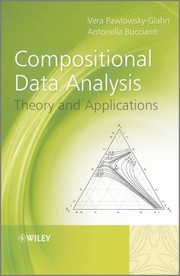 Compositional data analysisVera Pawlowsky-Glahn · 2011
 Principles of sedimentary basin analysisAndrew D. Miall · 1984
 Analyzing environmental dataWalter W. Piegorsch · 2004
- 📕Preliminary data and age-correlation for extra rock samples (KG-25 to KG-47) in the Cooperative Monterey organic geochemistry study, Santa Maria and Santa Barbara-Ventura basins, CaliforniaCaroline M Isaacs · 1993
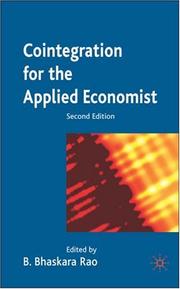 Cointegration for the Applied EconomistB. Bhaskara Rao · 2007
Ranked by number of editions on Open Library, a rough measure of how lasting a book is.
🔗 Related topics
- Pearson correlation coefficient In statistics, the Pearson correlation coefficient (PCC), also known as Pearson's r, the Pearson product-moment correlation coefficient (PPMCC), or simply…
- Covariance In probability theory and statistics, covariance is a measure of the joint variability of two random variables. The sign of the covariance shows the tendency…
- Partial correlation In probability theory and statistics, partial correlation measures the degree of association between two random variables, with the effect of a set of…
- Multivariate normal distribution In probability theory and statistics, the multivariate normal distribution, multivariate Gaussian distribution, or joint normal distribution is a generalization…
- Propagation of uncertainty In statistics, propagation of uncertainty is the effect of variables' uncertainties on the uncertainty of a function based on them. When the variables…
- Uncorrelatedness In probability theory and statistics, two real-valued random variables, X, Y, are said to be uncorrelated if their covariance, cov[X,Y]=E[XY]−E[X]E[Y]…
- Spearman's rank correlation coefficient In statistics, Spearman's rank correlation coefficient or Spearman's ρ is a number ranging from −1 to 1 that indicates how strongly two sets of ranks are…
- Correlation coefficient A correlation coefficient is a numerical measure of some type of linear correlation, meaning a linear function between two variables. The variables may…