Live briefing

Everything about Simple linear regression
Linear regression model with a single explanatory variable
In statistics, simple linear regression (SLR) is a linear regression model with a single explanatory variable. That is, it concerns two-dimensional sample points with one independent variable and one dependent variable and finds a linear function that, as accurately as possible, predicts the dependent variable values as a function of the independent variable. The adjective simple refers to the fact that the outcome variable is related to a single predictor. Wikipedia →
🧭 Start here: a 6-step reading path
- Read the overview: Simple linear regressionA 5-minute orientation
- Skim a recent paper: A simple linear regression strategy for fretting fatigue life estimatesInfluential work since 2022
- Pick up a classic book: Statistics for business and economicsThe most-reprinted book on the subject
- Read the landmark paper: Correlation and Simple Linear RegressionCited 869 times
- Go sideways: Residual sum of squaresA closely related topic
- Go sideways: Ordinary least squaresA closely related topic
📖 Definitions
No dictionary entry for this exact phrase.
🏆 Landmark papers (most cited)
Correlation and Simple Linear Regression
Simple linear regression
Simple Linear Regression in Medical Research
Simple and multiple linear regression: sample size considerations
Regression: simple linear
Revisiting simple linear regression with autocorrelated errors
Simple linear and multivariate regression models
Advanced Statistics: Linear Regression,Part I: Simple Linear Regression
🆕 Influential since 2022
A simple linear regression strategy for fretting fatigue life estimates
Refining Time-Space Traffic Diagrams: A Simple Multiple Linear Regression Model
Fisher information in ranked set sampling from the simple linear regression model
Sample Size Calculations in Simple Linear Regression: A New Approach
Simple and Multivariate Linear Regression Models for pH Conversion Between Measurement Techniques
📚 Books worth reading
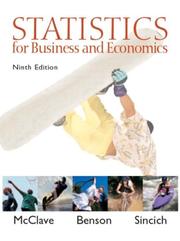 Statistics for business and economicsJames T. McClave, P. George Benson · 1978
 Learning to use statistical tests in psychologyJudith Greene, Manuela D'Oliveira · 1982
 Business StatisticsDavid M. Levine, Mark L. Berenson · 1999
 Handbook of Regression MethodsDerek Scott Young · 2017
 Applied nonparametric statisticsWayne W. Daniel · 1978
 SPSS BasicsZealure C. Holcomb · 2006
 Even You Can Learn StatisticsDavid M. Levine, David F. Stephan · 2004
 Biostatistical design and analysis using RMurray Logan · 2010
Ranked by number of editions on Open Library, a rough measure of how lasting a book is.
🔗 Related topics
- Residual sum of squares In statistics, the residual sum of squares (RSS), also known as the sum of squared residuals (SSR) or the sum of squared estimate of errors (SSE), is the…
- Ordinary least squares In statistics, ordinary least squares (OLS) is a type of linear least squares method for choosing the unknown parameters in a linear regression model by…
- Weighted least squares Weighted least squares (WLS), also known as weighted linear regression, is a generalization of ordinary least squares and linear regression in which knowledge…
- Studentized residual In statistics, a studentized residual is the dimensionless ratio resulting from the division of a residual by an estimate of its standard deviation, both…
- Prediction interval In statistical inference, specifically predictive inference, a prediction interval is an estimate of an interval in which a future observation will fall…
- Least squares In numerical linear algebra and regression analysis, least squares is a method to determine the best-fit model by minimizing the sum of the squared residuals—th…
- Coefficient of determination In statistics, the coefficient of determination, denoted R2 or r2 and pronounced "R squared", is the proportion of the variation in the dependent variable…
- Linear least squares Linear least squares (LLS) is the least squares approximation of linear functions to data. It is a set of formulations for solving statistical problems…