Everything about Mathematical induction
Form of mathematical proof

Mathematical induction is a method for proving that a statement is true for every natural number, that is, that the infinitely many cases all hold. This is done by first proving a simple case, then also showing that if we assume the claim is true for a given case, then the next case is also true. Informal metaphors help to explain this technique, such as falling dominoes or climbing a ladder:Mathematical induction proves that we can climb as high as we like on a ladder, by proving that we can climb onto the bottom rung and that from each rung we can climb up to the next one. Wikipedia →
🧭 Start here: a 6-step reading path
- Read the overview: Mathematical inductionA 5-minute orientation
- Skim a recent paper: An Improved Mathematical Model for Speed Sensorless Control of Fixed Pole Bearingless Induction MotorInfluential work since 2022
- Pick up a classic book: Fooled by randomnessThe most-reprinted book on the subject
- Read the landmark paper: Automated Mathematical InductionCited 37 times
- Go sideways: Peano axiomsA closely related topic
- Go sideways: Mathematical proofA closely related topic
📖 Definitions
Noun A method of proof which, in terms of a predicate P, could be stated as: if P(0) is true and if for any natural number n≥0, P(n) implies P(n+1), then P(n) is true for any natural number n.
🏆 Landmark papers (most cited)
Automated Mathematical Induction
On Mathematical Induction
Some beautiful arguments using mathematical induction
Mathematical induction: A pedagogical discussion
The Origin of Mathematical Induction
Mathematical induction and explanation
Mathematical induction in the classroom: Didactical and mathematical issues
Sound generalizations in mathematical induction
🆕 Influential since 2022
An Improved Mathematical Model for Speed Sensorless Control of Fixed Pole Bearingless Induction Motor
Induction Motor Dynamics Regimes: A Comprehensive Study of Mathematical Models and Validation
Modeling of high voltage induction motor cooling system using linear regression mathematical models
Addressing the Cognitive Gap in Mathematical Induction
Autograding Mathematical Induction Proofs with Natural Language Processing
📚 Books worth reading
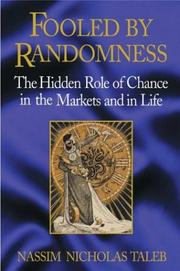 Fooled by randomnessNassim Nicholas Taleb · 2001
 Induction and analogy in mathematicsGeorge Pólya · 1954
- 📕The logical problem of inductionG. H. von Wright · 1941
- 📕Advanced topics in bisimulation and coinductionDavide Sangiorgi · 2011
 The Emergence of ProbabilityIan Hacking · 1975
- 📕Meaning of the Concept of Probability in Application to Finite Sequences (Routledge Revivals)Hilary Putnam · 2011
 Modeling and analysis with induction generatorsM. Godoy Simões · 2014
 The problem of inductive logicInternational Colloquium in the Philosophy of Science (1965 Bedford College) · 1968
Ranked by number of editions on Open Library, a rough measure of how lasting a book is.
🔗 Related topics
- Peano axioms In mathematical logic, the Peano axioms (/piˈɑːnoʊ/; [peˈaːno]), also known as the Dedekind–Peano axioms or the Peano postulates, are axioms for the natural…
- Mathematical proof A mathematical proof is a deductive argument for a mathematical statement, showing that the stated assumptions logically guarantee the conclusion. The…
- Epsilon-induction In set theory, ∈-induction, also called epsilon-induction or set-induction, is a principle that can be used to prove that all sets satisfy a given property…
- Pre-intuitionism In the philosophy of mathematics, the pre-intuitionists is the name given by L. E. J. Brouwer to several influential mathematicians who shared similar…
- Second-order arithmetic In mathematical logic, second-order arithmetic is a collection of axiomatic systems that formalize the natural numbers and their subsets. It is an alternative…
- Theorem In mathematics and formal logic, a theorem is a statement that has been proven, or can be proven. The proof of a theorem is a logical argument that uses…
- Constructive set theory Axiomatic constructive set theory is an approach to mathematical constructivism following the program of axiomatic set theory. The same first-order language…
- Proof sketch for Gödel's first incompleteness theorem This article gives a sketch of a proof of the first of Gödel's incompleteness theorems. This theorem applies to any formal theory that satisfies certain…