Everything about Theorem
In mathematics, a statement that has been proven

In mathematics and formal logic, a theorem is a statement that has been proven, or can be proven. The proof of a theorem is a logical argument that uses the inference rules of a deductive system to establish that the theorem is a logical consequence of the axioms and previously proved theorems. Wikipedia →
🧭 Start here: a 6-step reading path
- Read the overview: TheoremA 5-minute orientation
- Skim a recent paper: Experimental quantum key distribution certified by Bell's theoremInfluential work since 2022
- Pick up a classic book: Gödel's proofThe most-reprinted book on the subject
- Read the landmark paper: Quantum cryptography based on Bell’s theoremCited 9,628 times
- Go sideways: AxiomA closely related topic
- Go sideways: Mathematical proofA closely related topic
📖 Definitions
Noun A mathematical statement of some importance that has been proven to be true. Minor theorems are often called propositions. Theorems which are not very interesting in themselves but are an essential part of a bigger theorem's proof are called lemmas.
Noun A mathematical statement that is expected to be true.
Noun A syntactically correct expression that is deducible from the given axioms of a deductive system.
Verb To formulate into a theorem.
🏆 Landmark papers (most cited)
Quantum cryptography based on Bell’s theorem
The fluctuation-dissipation theorem
Optimal foraging, the marginal value theorem
Learning nonlinear operators via DeepONet based on the universal approximation theorem of operators
Experimental Tests of the Endowment Effect and the Coase Theorem
Strips: A new approach to the application of theorem proving to problem solving
Entropy production fluctuation theorem and the nonequilibrium work relation for free energy differences
Quantum cryptography without Bell’s theorem
🆕 Influential since 2022
Experimental quantum key distribution certified by Bell's theorem
Optimal Scaling Quantum Linear-Systems Solver via Discrete Adiabatic Theorem
On a limit theorem in combinatorical analysis
A novel theorem for prescribed-time control of nonlinear uncertain time-delay systems
CPT-based fully probabilistic seismic liquefaction potential assessment to reduce uncertainty: Integrating XGBoost algorithm with Bayesian theorem
📚 Books worth reading
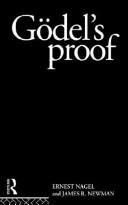 Gödel's proofErnest Nagel, James Roy Newman · 1958
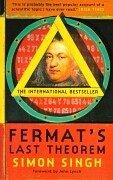 Fermat's Last TheoremSimon Singh · 1997
 The advanced theory of statisticsMaurice G. Kendall, Maurice Kendall · 1943
 The nature of existenceJohn McTaggart · 1921
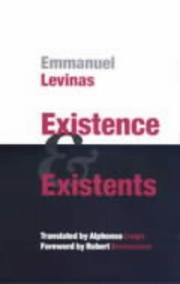 Existence and existentsEmmanuel Levinas · 1947
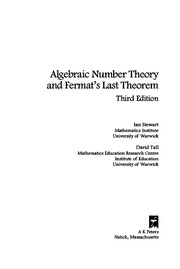 Algebraic number theoryIan Stewart, David Orme Tall · 1979
 The classical homoeopathic lectures of Dr. med. Vassilis GhegasVassilis Ghegas · 1991
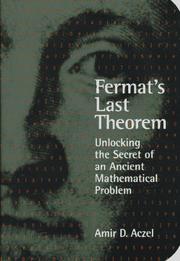 Fermat's last theoremAmir D. Aczel · 1996
Ranked by number of editions on Open Library, a rough measure of how lasting a book is.
🔗 Related topics
- Axiom An axiom, postulate, or assumption, is a statement that is taken to be true, to serve as a premise or starting point for further reasoning and arguments…
- Mathematical proof A mathematical proof is a deductive argument for a mathematical statement, showing that the stated assumptions logically guarantee the conclusion. The…
- Gödel's completeness theorem Gödel's completeness theorem is a fundamental theorem in mathematical logic that establishes a correspondence between semantic truth and syntactic provability…
- Gödel's incompleteness theorems Gödel's incompleteness theorems are two theorems of mathematical logic that are concerned with the limits of provability in formal axiomatic theories.…
- Tarski's undefinability theorem Tarski's undefinability theorem, stated and proved by Alfred Tarski in 1933, is an important limitative result in mathematical logic, the foundations of…
- First-order logic In mathematics, philosophy, linguistics, and computer science, first-order logic (FOL), also called predicate logic, predicate calculus, or quantificational…
- Consistency In deductive logic, a consistent theory is one that does not lead to a logical contradiction. A theory T is consistent if there is no formula φ such that…
- Elementary function arithmetic In proof theory, a branch of mathematical logic, elementary function arithmetic (EFA), also called elementary arithmetic and exponential function arithmetic…