Everything about Mathematical proof
Reasoning for mathematical statements

A mathematical proof is a deductive argument for a mathematical statement, showing that the stated assumptions logically guarantee the conclusion. The argument may use other previously established statements, such as theorems; but every proof can, in principle, be constructed using only certain basic or original assumptions known as axioms, along with the accepted rules of inference. Proofs are examples of exhaustive deductive reasoning that establish logical certainty, to be distinguished from empirical arguments or non-exhaustive inductive reasoning that establish "reasonable expectation". Presenting many cases in which the statement holds is not enough for a proof, which must demonstrate that the statement is true in all possible cases. A proposition that has not been proved but is believed to be true is known as a conjecture, or a hypothesis if frequently used as an assumption for further mathematical work. Wikipedia →
🧭 Start here: a 6-step reading path
- Read the overview: Mathematical proofA 5-minute orientation
- Skim a recent paper: Gamification of Behavior Change: Mathematical Principle and Proof-of-Concept StudyInfluential work since 2022
- Pick up a classic book: Fermat's Last TheoremThe most-reprinted book on the subject
- Read the landmark paper: Randomness and Mathematical ProofCited 449 times
- Go sideways: TheoremA closely related topic
- Go sideways: Mathematical inductionA closely related topic
📖 Definitions
No dictionary entry for this exact phrase.
🏆 Landmark papers (most cited)
Randomness and Mathematical Proof
IMPS: An interactive mathematical proof system
I.—MATHEMATICAL PROOF
THE PHENOMENOLOGY OF MATHEMATICAL PROOF
Mathematical Method and Proof
Truth versus validity in mathematical proof
MATHEMATICAL RIGOR AND PROOF
Mathematical Explanation beyond Explanatory Proof
🆕 Influential since 2022
Gamification of Behavior Change: Mathematical Principle and Proof-of-Concept Study
The Relationship Between Proof and Certainty in Mathematical Practice
Mathematical artificial intelligence design of mutation-proof COVID-19 monoclonal antibodies
Understanding authority in small-group co-constructions of mathematical proof
Undergraduate students’ attitudes towards mathematical proving in an introduction to proof course
📚 Books worth reading
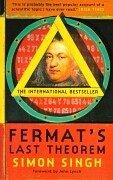 Fermat's Last TheoremSimon Singh · 1997
 Mathematical proofsDaniel Solow, Solow · 1982
 AnalysisSteven R. Lay · 1986
 Four Colours SufficeRobin J. Wilson · 2002
 Mathematical proofsGary Chartrand, Albert D. Polimeni · 2002
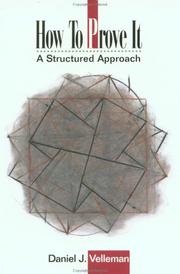 How to prove itDaniel J. Velleman · 1994
 History of Mathematical Proof in Ancient TraditionsKarine Chemla · 2012
- 📕Proof, Logic and FormalizationMichael Detlefsen · 1992
Ranked by number of editions on Open Library, a rough measure of how lasting a book is.
🔗 Related topics
- Theorem In mathematics and formal logic, a theorem is a statement that has been proven, or can be proven. The proof of a theorem is a logical argument that uses…
- Mathematical induction Mathematical induction is a method for proving that a statement P(n) is true for every natural number n, that is, that the infinitely many cases P(0),P(1)…
- Irrational number In mathematics, the irrational numbers are all the real numbers that are not rational numbers; that is, irrational numbers are those that cannot be expressed…
- Constructive proof In mathematics, a constructive proof is a method of proof that demonstrates the existence of a mathematical object by creating or providing a method for…
- Triviality (mathematics) In mathematics, the adjective trivial is often used to refer to a claim or a case which can be readily obtained from context, or a particularly simple…
- Proof by exhaustion Proof by exhaustion, also known as proof by cases, proof by case analysis, complete induction or the brute force method, is a method of mathematical proof…
- Foundations of mathematics Foundations of mathematics are the logical and mathematical frameworks that allow the development of mathematics without generating self-contradictory…
- Hilbert's program In mathematics, Hilbert's program, formulated by German mathematician David Hilbert in the early 1920s, was a proposed solution to the foundational crisis…