Everything about Job interview
Type of interview

A job interview is an interview consisting of a conversation between a job applicant and a representative of an employer which is conducted to assess whether the applicant should be hired. Interviews are one of the most common methods of employee selection. Interviews vary in the extent to which the questions are structured, from an unstructured and informal conversation to a structured interview in which an applicant is asked a predetermined list of questions in a specified order; structured interviews are usually more accurate predictors of which applicants will make suitable employees, according to research studies. Wikipedia →
🧭 Start here: a 6-step reading path
- Read the overview: Job interviewA 5-minute orientation
- Skim a recent paper: ChatGPT, can you take my job interview? Examining artificial intelligence cheating in the asynchronous video interviewInfluential work since 2022
- Pick up a classic book: Knock 'em deadThe most-reprinted book on the subject
- Read the landmark paper: Impression Management in the Job InterviewCited 107 times
- Go sideways: Employment testingA closely related topic
- Go sideways: Personnel psychologyA closely related topic
📖 Definitions
Noun A formal interview in which a job applicant must answer questions, especially in a professional manner, to determine whether they are suitable for the job applied for.
🏆 Landmark papers (most cited)
Impression Management in the Job Interview
Behavioral Expression of Job Interview Anxiety
Accent Accommodation in the Job Interview
TEACHING JOB INTERVIEW SKILLS TO RETARDED CLIENTS
Cognitive assessment of social-evaluative anxiety in the job interview: Job Interview Self-Statement Schedule.
Alignment talk in the job interview
Successfully Navigating the Physician Job Interview
The Winning Job Interview
🆕 Influential since 2022
ChatGPT, can you take my job interview? Examining artificial intelligence cheating in the asynchronous video interview
Multimodal job interview simulator for training of autistic individuals
Development and psychometric properties of self-reported job interview skills and job interview anxiety for autistic transition-age youth
Observing Interviewees’ Inner Self: How Authenticity Cues in Job Interviews Relate to Interview and Job Performance
How is disability addressed in a job interview?
📚 Books worth reading
 Knock 'em deadMartin John Yate · 1985
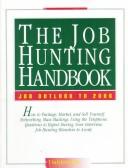 The Job Hunting HandbookHarry Dahlstrom · 1983
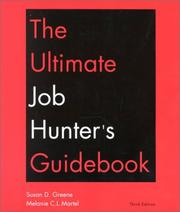 The ultimate job hunter's guidebookSusan D. Greene, Melanie C. L. Martel · 1998
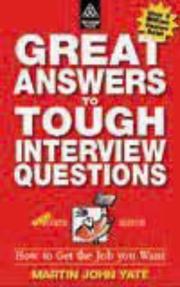 Great Answers to Tough Interview QuestionsMartin John Yate · 1986
 Guerilla tactics in the job marketTom Jackson · 1978
 Successful interview skillsRebecca Corfield · 1992
 The complete job-search handbookHoward E. Figler · 1979
 Interview MagicSusan Britton Whitcomb · 2004
Ranked by number of editions on Open Library, a rough measure of how lasting a book is.
🔗 Related topics
- Employment testing Employment testing is the practice of administering written, oral, or other tests as a means of determining the suitability or desirability of a job applicant…
- Personnel psychology Personnel psychology is a subfield of industrial and organizational (I-O) psychology . Personnel psychology is the area of I-O psychology that primarily…
- Personnel selection Personnel selection is the methodical process used to hire (or, less commonly, promote) individuals. Although the term can apply to all aspects of the…
- Situational judgement test A situational judgement test (SJT), also known as a situational stress test (SStT) or situational stress inventory (SSI), is a type of psychological test…
- Onboarding Onboarding or organizational socialization is the American term for the mechanism through which new employees acquire the necessary knowledge, skills,…
- Policy capturing Policy capturing or "the PC technique" is a statistical method used in social psychology to quantify the relationship between a person's judgement and…
- Counterproductive work behavior Counterproductive work behavior (CWB) is employee's behavior that goes against the legitimate interests of an organization. This behavior can harm the…
- Typical versus maximum performance The distinction between typical and maximum performance is one way to classify job performance in industrial/organizational psychology. Typical performance…