Everything about Indicative conditional
Natural-language "if" sentences about what may be the case
An indicative conditional is a natural-language conditional sentence used to talk about what may actually be the case, as in: "If Leona is at home, she isn't in Paris." Indicatives are commonly contrasted with counterfactual conditionals, which typically bear special grammatical marking and are used to discuss ways things might have been but are not. Wikipedia →
🧭 Start here: a 6-step reading path
- Read the overview: Indicative conditionalA 5-minute orientation
- Skim a recent paper: Path Semantics for Indicative ConditionalsInfluential work since 2022
- Pick up a classic book: Economic TrendsThe most-reprinted book on the subject
- Read the landmark paper: Indicative conditionalsCited 255 times
- Go sideways: Conditional logicA closely related topic
- Go sideways: Modus ponensA closely related topic
📖 Definitions
Noun A type of conditional statement in natural language that expresses a relationship between two propositions, and used to convey the situation where the truth of one proposition (the antecedent) suggests or implies the truth of another proposition (the consequent).
🗂️ The subject at a glance
🏆 Landmark papers (most cited)
Indicative conditionals
Indicative Conditionals
Indicative conditionals, conditional probabilities, and the “defective truth-table”: A request for more experiments
INDICATIVE CONDITIONALS
The effects of conditional indicative language on the comprehension and acceptance of advertising claims
Contextualist Theories of the Indicative Conditional and Stalnaker’s Thesis
AN EXPRESSIVIST ANALYSIS OF THE INDICATIVE CONDITIONAL WITH A RESTRICTOR SEMANTICS
The Casson Memorial Lecture 2003: Past Conditional, Present Indicative, Future Indefinite
🆕 Influential since 2022
Path Semantics for Indicative Conditionals
Certain and Uncertain Inference with Indicative Conditionals
The historical development of imperfect indicative and conditional inflection in Pyrenean Romance*
Dutch‐booking indicative conditionals
Acceptance and Certainty, Doxastic Modals, and Indicative Conditionals
📚 Books worth reading
 Economic TrendsOffice for National Statistics · 2003
 Weapons of Math DestructionCathy O'Neil · 2016
 An atlas of impossible longingAnuradha Roy, Arundhati Roy · 2008
 Castes and tribes of southern IndiaEdgar Thurston · 1909
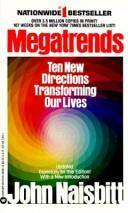 MegatrendsJohn Naisbitt · 1982
 TajTimeri Murari · 1985
- 📕NicaraguaNéstor Avendaño · 2002
 Megatrends 2000John Naisbitt · 1990
Ranked by number of editions on Open Library, a rough measure of how lasting a book is.
🔗 Related topics
- Conditional logic Conditional logic (also: the logic of conditionals) refers to a family of formal systems for reasoning with statements of the form "if A, (then) B". Conditional…
- Modus ponens In propositional logic, modus ponens (/ˈmoʊdəs ˈpoʊnɛnz/; MP), also known as modus ponendo ponens (from Latin 'mode that by affirming affirms'), conditional…
- Counterfactual conditional Counterfactual conditionals (also contrafactual/subjunctive/X-marked conditionals) are conditional sentences that describe what would have been true if…
- Deductive reasoning Deductive reasoning is the process of drawing valid inferences. An inference is valid if its conclusion follows logically from its premises, meaning that…
- Paradoxes of material implication The paradoxes of material implication are a group of classically true formulae involving material conditionals whose translations into natural language…
- Modus tollens In propositional logic, modus tollens (/ˈmoʊdəs ˈtɒlɛnz/) (MT), also known as modus tollendo tollens (Latin for "mode that by denying denies") and denying…
- Outline of logic Logic is the formal science of using reason and is considered a branch of both philosophy and mathematics and to a lesser extent computer science. Logic…
- Material conditional The material conditional (also known as material implication) is a binary operation commonly used in logic. When the conditional symbol → {\displaystyle…