Everything about Conditional logic
Family of logics for natural-language and counterfactual conditionals
Conditional logic refers to a family of formal systems for reasoning with statements of the form "if A, (then) B". Conditional logics are intended to capture the meaning and patterns of inference associated with natural language conditionals more faithfully than the classical material conditional, which gives rise to well-known paradoxes. Conditional logics are used in philosophical logic, formal semantics of natural language, artificial intelligence, and the psychology of reasoning. They are used to model everyday and scientific reasoning about hypothetical, causal, modal, and counterfactual scenarios. Wikipedia →
🧭 Start here: a 6-step reading path
- Read the overview: Conditional logicA 5-minute orientation
- Skim a recent paper: Conditional DQN-Based Motion Planning With Fuzzy Logic for Autonomous DrivingInfluential work since 2022
- Pick up a classic book: Fact, fiction and forecastThe most-reprinted book on the subject
- Read the landmark paper: Conditional Quantum Dynamics and Logic GatesCited 850 times
- Go sideways: Dynamic semanticsA closely related topic
- Go sideways: Non-normal modal logicA closely related topic
📖 Definitions
Noun A set of rules that lets a computer make decisions and run different blocks of code based on whether specific conditions are true or false.
🗂️ The subject at a glance
🏆 Landmark papers (most cited)
Conditional Quantum Dynamics and Logic Gates
Conditional-Sum Addition Logic
Basic conditional logic
The logic of conditional obligation
Probabilistic logic programming with conditional constraints
The Logic of Conditional Negation
Notes on conditional logic
The algebra of conditional logic
🆕 Influential since 2022
Conditional DQN-Based Motion Planning With Fuzzy Logic for Autonomous Driving
Lilac: A Modal Separation Logic for Conditional Probability
Identifying mental actions for abstracting the logic of conditional statements
Theo’s reinvention of the logic of conditional statements’ proofs rooted in set-based reasoning
A preferential interpretation of MultiLayer Perceptrons in a conditional logic with typicality
📚 Books worth reading
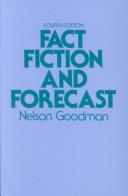 Fact, fiction and forecastNelson Goodman · 1954
 Pragmatics of conditional markingScott A. Schwenter · 1998
 Quantum MacroeconomicsJean-Luc Bailly, Alvaro Cencini · 2016
- 📕Mind, Method and ConditionalsJackson, Frank · 2002
- 📕Possible Worlds Semantics for Indicative and Counterfactual Conditionals?Matthias Unterhuber · 2013
- 📕If P, Then QSanford, David · 2011
- 📕Force, Content, and the Unity of the PropositionGabriele M. Mras, Michael Schmitz · 2021
 CounterfactualsLewis, David K. · 1973
Ranked by number of editions on Open Library, a rough measure of how lasting a book is.
🔗 Related topics
- Dynamic semantics Dynamic semantics is a framework in logic and natural language semantics that treats the meaning of a sentence as its potential to update a context. In…
- Non-normal modal logic A non-normal modal logic is a variant of modal logic that deviates from the basic principles of normal modal logics. Normal modal logics adhere to the…
- Proof-theoretic semantics Proof-theoretic semantics is a branch of proof theory and an approach to the semantics of logic in which the meaning of propositions and logical connectives…
- List of rules of inference This is a list of rules of inference, logical laws that relate to mathematical formulae. Rules of inference are syntactical transform rules which one can…
- Hypothetical syllogism In classical logic, a hypothetical syllogism is a valid argument form, a deductive syllogism with a conditional statement for one or both of its premises…
- Independence-friendly logic Independence-friendly logic (IF logic; proposed by Jaakko Hintikka and Gabriel Sandu [fr] in 1989) is an extension of classical first-order logic (FOL)…
- Epistemic modal logic Epistemic modal logic is a subfield of modal logic that is concerned with reasoning about knowledge. While epistemology has a long philosophical tradition…
- Intuitionistic logic Intuitionistic logic, sometimes more generally called constructive logic, refers to systems of symbolic logic that differ from the systems used for classical…