Everything about Data modeling
Creating a model of the data in a system

Data modeling is the process of creating a data model for an information system by applying formal techniques. It is used to define and analyze the data an organization needs to support its business processes. Data modelers usually work closely with business stakeholders and the people who will use the system. It is sometimes called database modeling, because a data model is eventually implemented in a database. Data modeling usually has three stages. A conceptual data model records the data requirements in a form that does not depend on any technology, so it can be discussed with the business. This is turned into a logical data model, which describes data structures that a database can implement. The last stage is a physical data model, which organizes the data into tables and deals with access, performance and storage. Used consistently, data modeling helps organizations manage data as a resource, integrate information systems, and design databases and data warehouses. Poor data models can make systems expensive to build and maintain, and can limit how well they support the business. Common approaches include top-down and bottom-up modeling, entity–relationship modeling, generic data models and semantic data modeling. Wikipedia →
🧭 Start here: a 6-step reading path
- Read the overview: Data modelingA 5-minute orientation
- Skim a recent paper: EnzymeML: seamless data flow and modeling of enzymatic dataInfluential work since 2022
- Pick up a classic book: Database ProcessingThe most-reprinted book on the subject
- Read the landmark paper: Modeling Multilevel Data StructuresCited 1,046 times
- Go sideways: Data modelA closely related topic
- Go sideways: Semantic data modelA closely related topic
📖 Definitions
Noun The process of creating a data model.
🗂️ The subject at a glance
🏆 Landmark papers (most cited)
Modeling Multilevel Data Structures
Nonparametric Statistical Data Modeling
Geographical data modeling
Scattered data modeling
Exploring Children's Data Modeling
Modeling software measurement data
Modeling complex environmental data
Modeling Nonstationary Longitudinal Data
🆕 Influential since 2022
EnzymeML: seamless data flow and modeling of enzymatic data
Data‐driven decision‐focused surrogate modeling
High school students’ data modeling practices and processes: from modeling unstructured data to evaluating automated decisions
Cooperative data-driven modeling
Longitudinal Image Data for Outcome Modeling
📚 Books worth reading
 Database ProcessingDavid Kroenke · 1977
 Weapons of Math DestructionCathy O'Neil · 2016
 Data analysis in vegetation ecologyOtto Wildi · 2010
 Linear Mixed ModelsBrady T. West, Kathleen B. Welch · 2006
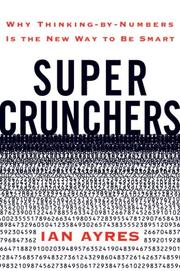 Super CrunchersIan Ayres · 2007
 Analytic Methods in SportsThomas A. Severini · 2014
 Computational materials scienceJune Gunn Lee · 2011
 Autodesk Inventor from the Top (Autodesk Inventor)Daniel T. Banach · 2001
Ranked by number of editions on Open Library, a rough measure of how lasting a book is.
🔗 Related topics
- Data model A data model is an abstract model that organizes elements of data and standardizes how they relate to one another and to the properties of real-world entities…
- Semantic data model A semantic data model (SDM) is a high-level semantics-based database description and structuring formalism (database model) for databases. This database…
- Entity–relationship model An entity–relationship model (or ER model) describes interrelated things of interest in a specific domain of knowledge. A basic ER model is composed of…
- Object–relational impedance mismatch Object–relational impedance mismatch is a set of difficulties going between data in relational data stores and data in domain-driven object models. Relational…
- Logical schema A logical data model or logical schema is a data model of a specific problem domain expressed independently of a particular database management product…
- Database model A database model is a type of data model that determines the logical structure of a database. It fundamentally determines in which manner data can be stored…
- Database In computing, a database is an organized collection of data or a type of data store based on the use of a database management system (DBMS), the software…
- Database design Database design is the organization of data according to a database model. The designer determines what data must be stored and how the data elements interrelat…