Live briefing

Everything about Data model
Abstract model
A data model is an abstract model that organizes elements of data and standardizes how they relate to one another and to the properties of real-world entities. For instance, a data model may specify that the data element representing a car be composed of a number of other elements which, in turn, represent the color and size of the car and define its owner. Wikipedia →
🧭 Start here: a 6-step reading path
- Read the overview: Data modelA 5-minute orientation
- Skim a recent paper: KEGG: biological systems database as a model of the real worldInfluential work since 2022
- Pick up a classic book: Database ProcessingThe most-reprinted book on the subject
- Read the landmark paper: Initial conditions and moment restrictions in dynamic panel data modelsCited 20,520 times
- Go sideways: Data modelingA closely related topic
- Go sideways: Entity–relationship modelA closely related topic
📖 Definitions
Noun A result of applying a data modeling to some particular application, using a database model such as relational.
Noun A database model, such as relational or hierarchical.
🏆 Landmark papers (most cited)
Initial conditions and moment restrictions in dynamic panel data models
Longitudinal data analysis using generalized linear models
Hyperspectral Image Denoising: From Model-Driven, Data-Driven, to Model-Data-Driven
Common Data Model for Neuroscience Data and Data Model Exchange
The logical data model
Temporal relational data model
Clinical Data Integration Model
Unidata’s Common Data Model mapping to the ISO 19123 Data Model
🆕 Influential since 2022
KEGG: biological systems database as a model of the real world
Accurate predictions on small data with a tabular foundation model
Explanation of machine learning models using shapley additive explanation and application for real data in hospital
A whole-slide foundation model for digital pathology from real-world data
RCSB Protein Data Bank (RCSB.org): delivery of experimentally-determined PDB structures alongside one million computed structure models of proteins from artificial intelligence/machine learning
📚 Books worth reading
 Database ProcessingDavid Kroenke · 1977
 Weapons of Math DestructionCathy O'Neil · 2016
 Data analysis in vegetation ecologyOtto Wildi · 2010
 Linear Mixed ModelsBrady T. West, Kathleen B. Welch · 2006
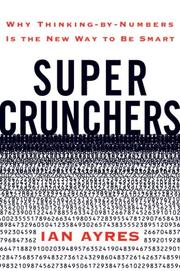 Super CrunchersIan Ayres · 2007
 Analytic Methods in SportsThomas A. Severini · 2014
 Computational materials scienceJune Gunn Lee · 2011
 Autodesk Inventor from the Top (Autodesk Inventor)Daniel T. Banach · 2001
Ranked by number of editions on Open Library, a rough measure of how lasting a book is.
🔗 Related topics
- Data modeling Data modeling is the process of creating a data model for an information system by applying formal techniques. It is used to define and analyze the data…
- Entity–relationship model An entity–relationship model (or ER model) describes interrelated things of interest in a specific domain of knowledge. A basic ER model is composed of…
- Database design Database design is the organization of data according to a database model. The designer determines what data must be stored and how the data elements interrelat…
- IDEF1X Integration Definition for Information Modeling (IDEF1X) is a data modeling language for the development of semantic data models. IDEF1X is used to produce…
- Semantic data model A semantic data model (SDM) is a high-level semantics-based database description and structuring formalism (database model) for databases. This database…
- Conceptual schema A conceptual schema or conceptual data model is a high-level description of informational needs underlying the design of a database. It typically includes…
- Enhanced entity–relationship model The Enhanced Entity–Relationship (EER) model is an extended version of the Entity–Relationship (ER) model used in database design. It incorporates additional…
- Information model An information model in software engineering is a representation of concepts and the relationships, constraints, rules, and operations to specify data…