Everything about Database
Organized collection of data in computing

In computing, a database is an organized collection of data or a type of data store based on the use of a database management system (DBMS), the software that interacts with end users, applications, and the database itself to capture and analyze the data. The DBMS additionally encompasses the core facilities provided to administer the database. The sum total of the database, the DBMS and the associated applications can be referred to as a database system. Often the term "database" is also used loosely to refer to any of the DBMS, the database system or an application associated with the database. Wikipedia →
🧭 Start here: a 6-step reading path
- Read the overview: DatabaseA 5-minute orientation
- Skim a recent paper: KEGG: biological systems database as a model of the real worldInfluential work since 2022
- Pick up a classic book: SQL for DummiesThe most-reprinted book on the subject
- Read the landmark paper: Gapped BLAST and PSI-BLAST: a new generation of protein database search programsCited 61,569 times
- Go sideways: Database serverA closely related topic
- Go sideways: Relational databaseA closely related topic
📖 Definitions
Noun A collection of (usually) organized information in a regular structure, usually but not necessarily in a machine-readable format accessible by a computer.
Noun A set of tables and other objects (queries, reports, forms) in the form of a structured data set.
Noun A software program (application) for storing, retrieving and manipulating such a structured data set.
Noun A combination of such data sets and the programs for using them.
🏆 Landmark papers (most cited)
Gapped BLAST and PSI-BLAST: a new generation of protein database search programs
The SILVA ribosomal RNA gene database project: improved data processing and web-based tools
The Molecular Signatures Database Hallmark Gene Set Collection
The STRING database in 2023: protein–protein association networks and functional enrichment analyses for any sequenced genome of interest
The Cambridge Structural Database: a quarter of a million crystal structures and rising
Greengenes, a Chimera-Checked 16S rRNA Gene Database and Workbench Compatible with ARB
The Cambridge Structural Database
Bond-valence parameters obtained from a systematic analysis of the Inorganic Crystal Structure Database
🆕 Influential since 2022
KEGG: biological systems database as a model of the real world
CARD 2023: expanded curation, support for machine learning, and resistome prediction at the Comprehensive Antibiotic Resistance Database
The PRIDE database at 20 years: 2025 update
The HITRAN2020 molecular spectroscopic database
AlphaFold Protein Structure Database in 2024: providing structure coverage for over 214 million protein sequences
📚 Books worth reading
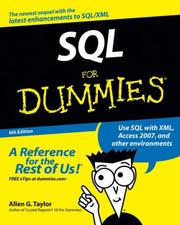 SQL for DummiesAllen G. Taylor, Reinhard Engel · 1993
 Database ProcessingDavid Kroenke · 1977
 Fundamentals of database systemsRamez Elmasri, Shamkant B. Navathe · 1989
 Data miningJiawei Han, Micheline Kamber · 2000
 Designing Data-Intensive ApplicationsMartin Kleppmann · 2017
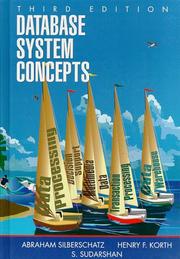 Database system conceptsAbraham Silberschatz · 1997
 Data science for dummiesLillian Pierson · 2015
 Database systemsPeter Rob · 1993
Ranked by number of editions on Open Library, a rough measure of how lasting a book is.
🔗 Related topics
- Database server A database server is a server which uses a database application that provides database services to other computer programs or to computers, as defined…
- Relational database A relational database (RDB) is a database based on the relational model of data, as proposed by E. F. Codd in 1970. A Relational Database Management System…
- Outline of databases The following is provided as an overview of and topical guide to databases: Database – organized collection of data, today typically in digital form. The…
- IBM Db2 Db2 is a family of data management products, including database servers, developed by IBM. It initially supported the relational model, but was extended…
- Shadow table Shadow tables are objects in computer science used to improve the way machines, networks and programs handle information. More specifically, a shadow table…
- Object–relational database An object–relational database (ORD), or object–relational database management system (ORDBMS), is a database management system (DBMS) similar to a relational…
- SQL Structured Query Language (SQL) (pronounced /ˌɛsˌkjuˈɛl/ S-Q-L; or alternatively as /ˈsiːkwəl/ "sequel") is a domain-specific language used to manage data…
- Dataphor Free and open-source software portal Dataphor is an open-source truly-relational database management system (RDBMS) and its accompanying user interface…