Live briefing

Everything about Database model
Type of data model
A database model is a type of data model that determines the logical structure of a database. It fundamentally determines in which manner data can be stored, organized and manipulated. The most popular example of a database model is the relational model, which uses a table-based format. Wikipedia →
🧭 Start here: a 6-step reading path
- Read the overview: Database modelA 5-minute orientation
- Skim a recent paper: KEGG: biological systems database as a model of the real worldInfluential work since 2022
- Pick up a classic book: Database ProcessingThe most-reprinted book on the subject
- Read the landmark paper: AlphaFold Protein Structure Database: massively expanding the structural coverage of protein-sequence space with high-accuracy modelsCited 8,427 times
- Go sideways: Relational modelA closely related topic
- Go sideways: Relational databaseA closely related topic
📖 Definitions
Noun Any fundamental way of organizing data in a database, such as a hierarchical one, a network one, or a relational one.
🏆 Landmark papers (most cited)
AlphaFold Protein Structure Database: massively expanding the structural coverage of protein-sequence space with high-accuracy models
IFO: a formal semantic database model
The PMDB Protein Model Database
RUSLE Model Description and Database Sensitivity
Minimum Covers in Relational Database Model
MOPED: Model Organism Protein Expression Database
A graph-oriented object database model
Resource space model, OWL and database
🆕 Influential since 2022
KEGG: biological systems database as a model of the real world
BatteryBERT: A Pretrained Language Model for Battery Database Enhancement
DB-GPT: Large Language Model Meets Database
PathBank 2.0—the pathway database for model organism metabolomics
Predictive Model for Heart Failure Readmission Using Nationwide Readmissions Database
📚 Books worth reading
 Database ProcessingDavid Kroenke · 1977
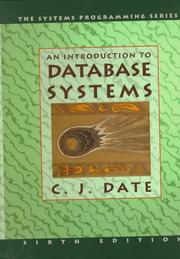 An introduction to database systemsC. J. Date · 1975
 High Performance MySQLJeremy D. Zawodny, Derek J. Balling · 2004
 MongoDBMichael Dirolf, Kristina Chodorow · 2010
 The data warehouse lifecycle toolkitRalph Kimball, Margy Ross · 2008
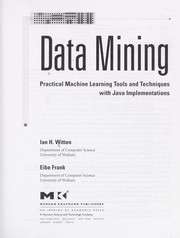 Data miningI. H. Witten, Ian H. Witten · 1999
 Access database design & programmingSteven Roman · 1997
- 📕Multiagent SystemsMagdi S. Mahmoud · 2020
Ranked by number of editions on Open Library, a rough measure of how lasting a book is.
🔗 Related topics
- Relational model The relational model (RM) is an approach to managing data using a structure and language consistent with first-order predicate logic, first described in…
- Relational database A relational database (RDB) is a database based on the relational model of data, as proposed by E. F. Codd in 1970. A Relational Database Management System…
- Outline of databases The following is provided as an overview of and topical guide to databases: Database – organized collection of data, today typically in digital form. The…
- First normal form First normal form (1NF) is the most basic level of database normalization defined by English computer scientist Edgar F. Codd, the inventor of the relational…
- Table (database) In a database, a table is a collection of related data organized in table format (consisting of columns and rows). In relational databases, and flat file…
- Hierarchical database model A hierarchical database model is a data model in which the data is organized into a tree-like structure. The data are stored as records which is a collection…
- Data model A data model is an abstract model that organizes elements of data and standardizes how they relate to one another and to the properties of real-world entities…
- Entity–attribute–value model An entity–attribute–value model (EAV) is a data model optimized for the space-efficient storage of sparse—or ad-hoc—property or data values, intended for…