Live briefing
Everything about Approximate Bayesian computation
Computational method in Bayesian statistics
Approximate Bayesian computation (ABC) constitutes a class of computational methods rooted in Bayesian statistics that can be used to estimate the posterior distributions of model parameters. Wikipedia →
🧭 Start here: a 6-step reading path
- Read the overview: Approximate Bayesian computationA 5-minute orientation
- Skim a recent paper: pyABC: Efficient and robust easy-to-use approximate Bayesian computationInfluential work since 2022
- Pick up a classic book: Artificial intelligenceThe most-reprinted book on the subject
- Read the landmark paper: Approximate Bayesian Computation in Population GeneticsCited 2,525 times
- Go sideways: Bayesian statisticsA closely related topic
- Go sideways: Bayesian inferenceA closely related topic
📖 Definitions
No dictionary entry for this exact phrase.
🗂️ The subject at a glance
🏆 Landmark papers (most cited)
Approximate Bayesian Computation in Population Genetics
Approximate Bayesian Computation (ABC) in practice
Approximate Bayesian Computation in Evolution and Ecology
Approximate Bayesian Computation
Adaptive approximate Bayesian computation
Constructing Summary Statistics for Approximate Bayesian Computation: Semi-Automatic Approximate Bayesian Computation
Non-linear regression models for Approximate Bayesian Computation
A tutorial on approximate Bayesian computation
🆕 Influential since 2022
pyABC: Efficient and robust easy-to-use approximate Bayesian computation
Dark energy by natural evolution: Constraining dark energy using Approximate Bayesian Computation
Convolutional Neural Networks as Summary Statistics for Approximate Bayesian Computation
A generic stochastic hybrid car-following model based on approximate Bayesian computation
Guided wave-based characterisation of cracks in pipes utilising approximate Bayesian computation
📚 Books worth reading
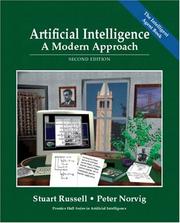 Artificial intelligenceStuart J. Russell, Peter Norvig · 1994
 Neural Information ProcessingTingwen Huang · 2012
 Communications, Signal Processing, and SystemsQilian Liang · 2012
 Statistical Atlases and Computational Models of the Heart. Imaging and Modelling ChallengesOscar Camara · 2012
 The Elements of Statistical LearningTrevor Hastie, Robert Tibshirani · 2001
- 📕Bayesian time series modelsDavid Barber, Ali Taylan Cemgil · 2011
 The Jackknife and BootstrapJun Shao, Dongsheng Tu · 1995
 Introduction to Multiple Time Series AnalysisHelmut Lütkepohl, Helmut Lutkepohl · 1991
Ranked by number of editions on Open Library, a rough measure of how lasting a book is.
🔗 Related topics
- Bayesian statistics Bayesian statistics (/ˈbeɪziən/ BAY-zee-ən or /ˈbeɪʒən/ BAY-zhən) is a theory in the field of statistics based on the Bayesian interpretation of probability…
- Bayesian inference Bayesian inference (/ˈbeɪziən/ BAY-zee-ən or /ˈbeɪʒən/ BAY-zhən) is a method of statistical inference in which Bayes' theorem is used to calculate a probability…
- Marginal likelihood A marginal likelihood is a likelihood function that has been integrated over the parameter space. In Bayesian statistics, it represents the probability…
- Nested sampling algorithm The nested sampling algorithm is a computational approach to the Bayesian statistics problems of comparing models and generating samples from posterior…
- Bayesian econometrics Bayesian econometrics is a branch of econometrics which applies Bayesian principles to economic modelling. Bayesianism is based on a degree-of-belief interpreta…
- Likelihood function A likelihood function (often simply called the likelihood) gives the relative merit of various statistical models for describing a data set. Often the…
- Stochastic gradient Langevin dynamics Stochastic gradient Langevin dynamics (SGLD) is an optimization and sampling technique composed of characteristics from Stochastic gradient descent, a…
- Statistical model A statistical model is a mathematical model that embodies a set of statistical assumptions concerning the generation of sample data (and similar data from…