Live briefing
Everything about Marginal likelihood
In Bayesian probability theory
A marginal likelihood is a likelihood function that has been integrated over the parameter space. In Bayesian statistics, it represents the probability of generating the observed sample for all possible values of the parameters; it can be understood as the probability of the model itself and is therefore often referred to as model evidence or simply evidence. Wikipedia →
🧭 Start here: a 6-step reading path
- Read the overview: Marginal likelihoodA 5-minute orientation
- Skim a recent paper: Marginal Likelihood Computation for Model Selection and Hypothesis Testing: An Extensive ReviewInfluential work since 2022
- Pick up a classic book: Gaussian processes for machine learningThe most-reprinted book on the subject
- Read the landmark paper: Fast Stable Restricted Maximum Likelihood and Marginal Likelihood Estimation of Semiparametric Generalized Linear ModelsCited 6,923 times
- Go sideways: Conjugate priorA closely related topic
- Go sideways: Poisson regressionA closely related topic
📖 Definitions
No dictionary entry for this exact phrase.
🗂️ The subject at a glance
🏆 Landmark papers (most cited)
Fast Stable Restricted Maximum Likelihood and Marginal Likelihood Estimation of Semiparametric Generalized Linear Models
Marginal Maximum Likelihood Estimation of Item Parameters: Application of an EM Algorithm
Marginal Likelihood from the Gibbs Output
Improving Marginal Likelihood Estimation for Bayesian Phylogenetic Model Selection
Marginal Likelihood From the Metropolis–Hastings Output
Marginal Likelihood Estimation via Power Posteriors
Marginal Likelihood Estimation with the Cross-Entropy Method
Marginal empirical likelihood and sure independence feature screening
🆕 Influential since 2022
Marginal Likelihood Computation for Model Selection and Hypothesis Testing: An Extensive Review
Fast and credible likelihood-free cosmology with truncated marginal neural ratio estimation
Bayesian updating and marginal likelihood estimation by cross entropy based importance sampling
Power Analysis for the Wald, LR, Score, and Gradient Tests in a Marginal Maximum Likelihood Framework: Applications in IRT
Bayesian optimization of hyperparameters from noisy marginal likelihood estimates
📚 Books worth reading
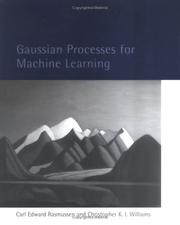 Gaussian processes for machine learningCarl Edward Rasmussen · 2005
 Introduction to Probability and StatisticsJ. Susan Milton, Jesse C. Arnold · 1990
- 📕Xcalibre(tm) 1.10Assessment Syst · 1996
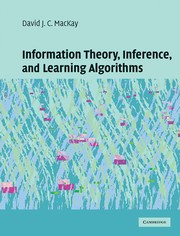 Information Theory, Inference & Learning AlgorithmsDavid J.C. MacKay · 2003
 Linguistic structure predictionNoah A. Smith · 2011
- 📕Some applications of marginal likelihood to structural modelsMacKay · 1971
- 📕Marginal likelihood and generalisations on the structural modelKlass · 1970
- 📕Composite Marginal Likelihood (CML) Inference Approach with Applications to Discrete and Mixed Dependent Variable ModelsChandra R. Bhat · 2014
Ranked by number of editions on Open Library, a rough measure of how lasting a book is.
🔗 Related topics
- Conjugate prior In Bayesian probability theory, if, given a likelihood function p ( x ∣ θ ) {\displaystyle p(x\mid \theta )} , the posterior distribution p ( θ ∣ x ) {\displays…
- Poisson regression In statistics, Poisson regression is a generalized linear model form of regression analysis used to model count data and contingency tables. Poisson regression…
- Empirical Bayes method Empirical Bayes methods are procedures for statistical inference in which the prior probability distribution is estimated from the data. This approach…
- Bayesian linear regression Bayesian linear regression is a type of conditional modeling in which the mean of one variable is described by a linear combination of other variables…
- Inverse-Wishart distribution In statistics, the inverse Wishart distribution, also called the inverted Wishart distribution, is a probability distribution defined on real-valued positive-de…
- Chinese restaurant process In probability theory, the Chinese restaurant process is a discrete-time stochastic process, analogous to seating customers at tables in a restaurant.…
- Natural exponential family In probability and statistics, a natural exponential family (NEF) is a class of probability distributions that is a special case of an exponential family…
- Bayesian statistics Bayesian statistics (/ˈbeɪziən/ BAY-zee-ən or /ˈbeɪʒən/ BAY-zhən) is a theory in the field of statistics based on the Bayesian interpretation of probability…