Everything about Statistical model
Type of mathematical model
A statistical model is a mathematical model that embodies a set of statistical assumptions concerning the generation of sample data. A statistical model represents, often in considerably idealized form, the data-generating process. When referring specifically to probabilities, the corresponding term is probabilistic model. All statistical hypothesis tests and all statistical estimators are derived via statistical models. More generally, statistical models are part of the foundation of statistical inference. A statistical model is usually specified as a mathematical relationship between one or more random variables and other non-random variables. As such, a statistical model is "a formal representation of a theory". Wikipedia →
🧭 Start here: a 6-step reading path
- Read the overview: Statistical modelA 5-minute orientation
- Skim a recent paper: Comparison and evaluation of statistical error models for scRNA-seqInfluential work since 2022
- Pick up a classic book: Time Series AnalysisThe most-reprinted book on the subject
- Read the landmark paper: A new look at the statistical model identificationCited 43,521 times
- Go sideways: Sufficient statisticA closely related topic
- Go sideways: Parametric modelA closely related topic
📖 Definitions
No dictionary entry for this exact phrase.
🗂️ The subject at a glance
🏆 Landmark papers (most cited)
A new look at the statistical model identification
Statistical Model of Intermediate Structure
Statistical Bootstrap Model of Hadrons
What is a statistical model?
Statistical model of matter
Statistical model of matter
Statistical Model Choice
Statistical methods in model discrimination
🆕 Influential since 2022
Comparison and evaluation of statistical error models for scRNA-seq
Beyond t test and ANOVA: applications of mixed-effects models for more rigorous statistical analysis in neuroscience research
How to Interpret Statistical Models Using marginaleffects for R and Python
Model‐based variance partitioning for statistical ecology
Anatomically Parameterized Statistical Shape Model: Explaining Morphometry Through Statistical Learning
📚 Books worth reading
 Time Series AnalysisGeorge E. P. Box, Gwilym M. Jenkins · 1970
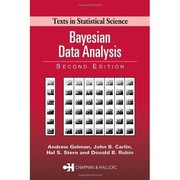 Bayesian data analysisAndrew Gelman, John B. Carlin · 1995
 A first course in linear model theoryNalini Ravishanker, Dipak K. Dey · 2001
 Basic econometricsDamodar N. Gujarati · 1978
 Statistical RethinkingRichard McElreath · 2015
 Structural equation modeling with AMOSBarbara M Byrne, Barbara Byrne · 2000
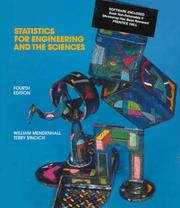 Statistics for engineering and the sciencesWilliam Mendenhall, Terry Sincich · 1991
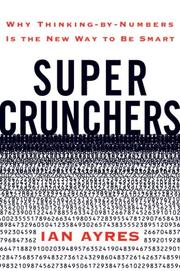 Super CrunchersIan Ayres · 2007
Ranked by number of editions on Open Library, a rough measure of how lasting a book is.
🔗 Related topics
- Sufficient statistic In statistics, sufficiency is a property of a statistic computed on a sample dataset in relation to a parametric model of the dataset. A sufficient statistic…
- Parametric model In statistics, a parametric model or parametric family or finite-dimensional model is a particular class of statistical models. Specifically, a parametric…
- Variational Bayesian methods Variational Bayesian methods are a family of techniques for approximating intractable integrals arising in Bayesian inference and machine learning. They…
- Bootstrapping (statistics) Bootstrapping is a procedure for estimating the distribution of an estimator by resampling (often with replacement) one's data or a model which is estimated…
- Parametric statistics Parametric statistics is a branch of statistics that is concerned with the analysis of and inference from data assuming that the underlying distribution…
- Mixture model In statistics, a mixture model is a probabilistic model for representing the presence of subpopulations within an overall population, without requiring…
- Akaike information criterion The Akaike information criterion (AIC) is an estimator of prediction error and thereby relative quality of statistical models for a given set of data.…
- Semiparametric model In statistics, a semiparametric model is a statistical model that has parametric and nonparametric components. A statistical model is a parameterized family…