Everything about Word
Basic elements of language

A word is a basic element of language that carries meaning, can be used on its own, and is uninterruptible. Despite the fact that language speakers often have an intuitive grasp of what a word is, there is no consensus among linguists on its definition and numerous attempts to find specific criteria of the concept remain controversial. Different standards have been proposed, depending on the theoretical background and descriptive context; these do not converge on a single definition. Some specific definitions of the term "word" are employed to convey its different meanings at different levels of description, for example based on phonological, grammatical or orthographic basis. Others suggest that the concept is simply a convention used in everyday situations. Wikipedia →
🧭 Start here: a 6-step reading path
- Read the overview: WordA 5-minute orientation
- Skim a recent paper: How to conduct a bibliometric content analysis: Guidelines and contributions of content co‐occurrence or co‐word literature reviewsInfluential work since 2022
- Pick up a classic book: A dictonary of archaic and provincial words, obsolete phrases, proverbs, and ancient customs, from the fourteenth centuryThe most-reprinted book on the subject
- Read the landmark paper: Enriching Word Vectors with Subword InformationCited 5,913 times
- Go sideways: Morphology (linguistics)A closely related topic
- Go sideways: MorphemeA closely related topic
📖 Definitions
Noun The smallest unit of language that has a particular meaning and can be expressed by itself; the smallest discrete, meaningful unit of language. The smallest discrete unit of spoken language with a particular meaning, composed of one or more phonemes and one or more morphemes. The smallest discrete unit of written language with a particular meaning, composed of one or more letters or symbols and one or more morphemes. A discrete, meaningful unit of language approved by an authority or native speaker (compare non-word). A sign used in a sign language.
Noun The smallest discrete unit of spoken language with a particular meaning, composed of one or more phonemes and one or more morphemes.
Noun The smallest discrete unit of written language with a particular meaning, composed of one or more letters or symbols and one or more morphemes.
Noun A discrete, meaningful unit of language approved by an authority or native speaker (compare non-word).
🗂️ The subject at a glance
🏆 Landmark papers (most cited)
Enriching Word Vectors with Subword Information
Dynamic programming algorithm optimization for spoken word recognition
The Effect of Word of Mouth on Sales: Online Book Reviews
Electronic word-of-mouth via consumer-opinion platforms: What motivates consumers to articulate themselves on the Internet?
Comparison of parametric representations for monosyllabic word recognition in continuously spoken sentences
Word of Mouth for Movies: Its Dynamics and Impact on Box Office Revenue
DRC: A dual route cascaded model of visual word recognition and reading aloud.
Networked Narratives: Understanding Word-of-Mouth Marketing in Online Communities
🆕 Influential since 2022
How to conduct a bibliometric content analysis: Guidelines and contributions of content co‐occurrence or co‐word literature reviews
Unified Named Entity Recognition as Word-Word Relation Classification
Impact of word embedding models on text analytics in deep learning environment: a review
Assessing the impact of AI-chatbot service quality on user e-brand loyalty through chatbot user trust, experience and electronic word of mouth
A review of three decades of academic research on brand equity: A bibliometric approach using co-word analysis and bibliographic coupling
📚 Books worth reading
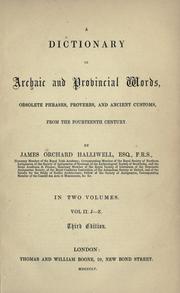 A dictonary of archaic and provincial words, obsolete phrases, proverbs, and ancient customs, from the fourteenth centuryJames Orchard Halliwell-Phillipps · 1846
 Four Past MidnightStephen King · 1990
 Introduction to metaphysicsMartin Heidegger, Gregory Fried · 1953
 Access to MathGlobe Fearon · 1808
 A Scanner DarklyPhilip K. Dick · 1977
 C D B!William Steig · 1968
 South-Western college keyboardingC. H. Duncan, Charles H. Duncan · 1993
 Misquoting JesusBart D. Ehrman, Bart D. Ehrman · 2005
Ranked by number of editions on Open Library, a rough measure of how lasting a book is.
🔗 Related topics
- Morphology (linguistics) In linguistics, morphology is the study of how words are formed, and how they relate to one another within a language. Most approaches to morphology investigate…
- Morpheme In linguistics, a morpheme is the smallest meaningful constituent of a linguistic expression, especially within a word. Many words are themselves standalone…
- Affix In linguistics, an affix is a morpheme that is attached to a word stem to form a new word or word form. The two main categories are derivational and inflectiona…
- Tonkawa language The Tonkawa language was a language spoken in Oklahoma, Texas, and New Mexico by the Tonkawa people. A language isolate, with no known related languages…
- Apophony In linguistics, apophony is an alternation of vowel (quality) within a word that indicates grammatical information (often inflectional). It is also known…
- Inflection In linguistic morphology, inflection (less commonly, inflexion) is a process of word formation in which a word is modified to express different grammatical…
- Morphological derivation Morphological derivation, in linguistics, is the process of forming a new word from an existing word, often by adding a prefix or suffix, such as un- or…
- Grammaticalization Grammaticalization (also known as grammatization or grammaticization) is a linguistic process in which words change from representing objects or actions…