Everything about Affix
Morpheme that is attached to a word stem to form a new word
In linguistics, an affix is a morpheme that is attached to a word stem to form a new word or word form. The two main categories are derivational and inflectional affixes. Derivational affixes, such as un-, -ation, anti-, and pre-, introduce a semantic change to the word they are attached to. Inflectional affixes introduce a syntactic change, such as singular into plural, or present simple tense into present continuous or past tense by adding -ing or -ed to an English word. All of them are bound morphemes by definition; prefixes and suffixes may be separable affixes. Wikipedia →
🧭 Start here: a 6-step reading path
- Read the overview: AffixA 5-minute orientation
- Skim a recent paper: Affix rivalry: Theoretical and methodological challengesInfluential work since 2022
- Pick up a classic book: The syntax of verbal affixationThe most-reprinted book on the subject
- Read the landmark paper: From Speech Perception to Morphology: Affix Ordering RevisitedCited 83 times
- Go sideways: Morphological derivationA closely related topic
- Go sideways: MorphemeA closely related topic
📖 Definitions
Noun A bound morpheme added to a word’s stem, such as a prefix or suffix.
Noun That which is affixed; an appendage.
Noun The complex number a+bi associated with the point in the Gauss plane with coordinates (a,b).
Noun Any small feature, as a figure, a flower, or the like, added for ornament to a vessel or other utensil, to an architectural feature.
🗂️ The subject at a glance
🏆 Landmark papers (most cited)
From Speech Perception to Morphology: Affix Ordering Revisited
Morphological Priming: The Role of Prime Duration, Semantic Transparency, and Affix Position
Strength and similarity of affix removal stemming algorithms
An affix acquisition order for EFL learners: an exploratory study
BARE PLURALS AND THE NUMBER AFFIX IN DP
Hermit Crabs: Formal Renewal of Morphology by Phonologically Mediated Affix Substitution
Affix grammar driven code generation
A (phrasal) affix analysis of the Persian Ezafe
🆕 Influential since 2022
Affix rivalry: Theoretical and methodological challenges
Affix polyfunctionality in French deverbal nominalizations
Low-Resource POS Tagging With Deep Affix Representation and Multi-Head Attention
The lexical core of a complex functional affix: Russian baby diminutive -onok
Effects of Affix Type and Base Word Transparency on Students' Performance on Different Morphological Awareness Measures
📚 Books worth reading
 The syntax of verbal affixationFrank Drijkoningen · 1989
 Russian root listCharles E. Gribble · 1973
- 📕Kugŏ ŭi 'tʻae' yŏnʼguMyŏng-sun Kang · 2007
- 📕Russian verbal prefixation and semantic featuresJames Gallant · 1979
- 📕A practical guide to a right understanding of the prefixes and affixes in the English languageR. C. Geggie · 1841
- 📕Sli︠e︡dy korneĭ-osnov v slavi︠a︡nskikh i︠a︡zykakhA. L. Pogodin · 1903
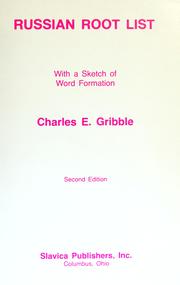 Russian root list with a sketch of word formationCharles E. Gribble · 1981
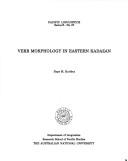 Verb morphology in Eastern KadazanHope M. Hurlbut · 1988
Ranked by number of editions on Open Library, a rough measure of how lasting a book is.
🔗 Related topics
- Morphological derivation Morphological derivation, in linguistics, is the process of forming a new word from an existing word, often by adding a prefix or suffix, such as un- or…
- Morpheme In linguistics, a morpheme is the smallest meaningful constituent of a linguistic expression, especially within a word. Many words are themselves standalone…
- Lexeme A lexeme (/ˈlɛksiːm/ ) is a unit of lexical meaning that underlies a set of words that are related through inflection. It is a basic abstract unit of meaning…
- Prefix A prefix is an affix which is placed before the stem and before the suffix of a word. Particularly in the study of languages, a prefix is also called a…
- Halkomelem Halkomelem (/ˌhɒlkəˈmeɪləm/ HALL-kə-MAY-ləm; Halq̓eméylem in the Upriver dialect, Hul̓q̓umín̓um̓ in the Island dialect, and hən̓q̓əmin̓əm̓ in the Downriver…
- Complex words Complex words are words consisting of two or more morphemes. In morphology, they are distinguished from simple or simplex words, which consist of a single…
- Morphology (linguistics) In linguistics, morphology is the study of how words are formed, and how they relate to one another within a language. Most approaches to morphology investigate…
- Inflection In linguistic morphology, inflection (less commonly, inflexion) is a process of word formation in which a word is modified to express different grammatical…