Everything about Visual perception
Ability to interpret the surrounding environment using light in the visible spectrum

Visual perception is the ability to detect light and use it to form an image of the surrounding environment. Photodetection without image formation is classified as light sensing. In most vertebrates, visual perception can be enabled by photopic vision or scotopic vision, with most vertebrates having both. Visual perception detects light (photons) in the visible spectrum reflected by objects in the environment or emitted by light sources. The visible range of light is defined by what is readily perceptible to humans, though the visual perception of non-humans often extends beyond the visual spectrum. The resulting perception is also known as vision, sight, or eyesight. The various physiological components involved in vision are referred to collectively as the visual system, and are the focus of much research in linguistics, psychology, cognitive science, neuroscience, and molecular biology, collectively referred to as vision science. Wikipedia →
🧭 Start here: a 6-step reading path
- Read the overview: Visual perceptionA 5-minute orientation
- Skim a recent paper: Bioinspired in-sensor visual adaptation for accurate perceptionInfluential work since 2022
- Pick up a classic book: Interaction of ColourThe most-reprinted book on the subject
- Read the landmark paper: Separate visual pathways for perception and actionCited 5,118 times
- Go sideways: Visual systemA closely related topic
- Go sideways: RetinaA closely related topic
📖 Definitions
No dictionary entry for this exact phrase.
🏆 Landmark papers (most cited)
Separate visual pathways for perception and action
Visual perception of biological motion and a model for its analysis
Forest before trees: The precedence of global features in visual perception
Visual Motion Perception
Visual motion perception.
Early Visual Perception
Attention and visual perception
Visual Perception
🆕 Influential since 2022
📚 Books worth reading
 Interaction of ColourJoseph Albers · 1963
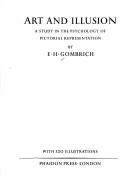 Art and illusionE. H. Gombrich · 1960
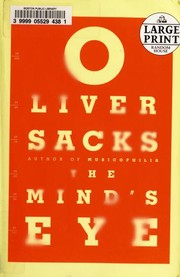 The Mind's EyeOliver Sacks · 2010
 Ways of SeeingJohn Berger · 1972
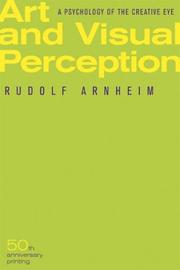 Art and visual perceptionRudolf Arnheim · 1954
 Varieties of visual experienceEdmund Burke Feldman · 1971
 Prebles' artformsPatrick Frank, Duane Preble · 2005
 The astonishing hypothesisFrancis Crick · 1993
Ranked by number of editions on Open Library, a rough measure of how lasting a book is.
🔗 Related topics
- Visual system The visual system is the physiological basis of visual perception (the ability to detect and process light). The system detects, transduces and interprets…
- Retina The retina (from Latin rete 'net'; pl. retinae or retinas) is the innermost, light-sensitive layer of tissue of the eye. The optics of the eye create a…
- Visual processing Visual processing is the brain's ability to use and interpret visual information from the world. The process of converting light into a meaningful image…
- Photoreceptor cell A photoreceptor cell is a specialized type of neuroepithelial cell found in the retina that is capable of visual phototransduction. The great biological…
- Afterimage An afterimage, or after-image, is an image that continues to appear in the eyes after a period of exposure to the original image. An afterimage may be…
- Parasol cell A parasol cell, sometimes called an M cell or M ganglion cell, is one type of retinal ganglion cell (RGC) located in the ganglion cell layer of the retina…
- Color vision Color vision (CV), a feature of visual perception, is an ability to perceive differences between light composed of different frequencies independently…
- Receptive field In neuroscience, a receptive field or sensory space has been defined by Alonso and Chen as: a portion of sensory space that can elicit neuronal responses…