Live briefing
Everything about Visual processing
Cognitive ability to interpret visual information
Visual processing is the brain's ability to use and interpret visual information from the world. The process of converting light into a meaningful image is a complex process that is facilitated by numerous brain structures and higher-level cognitive processes. Wikipedia →
🧭 Start here: a 6-step reading path
- Read the overview: Visual processingA 5-minute orientation
- Skim a recent paper: JIPipe: visual batch processing for ImageJInfluential work since 2022
- Pick up a classic book: Fundamentals of NursingThe most-reprinted book on the subject
- Read the landmark paper: Iolite: Freeware for the visualisation and processing of mass spectrometric dataCited 4,333 times
- Go sideways: Inferior temporal gyrusA closely related topic
- Go sideways: Neuronal tuningA closely related topic
📖 Definitions
No dictionary entry for this exact phrase.
🏆 Landmark papers (most cited)
Iolite: Freeware for the visualisation and processing of mass spectrometric data
MZmine 2: Modular framework for processing, visualizing, and analyzing mass spectrometry-based molecular profile data
ATTENTIONAL MODULATION OF VISUAL PROCESSING
Early processing of visual information
Visual processing of optic acceleration
Spatiotemporal Visual Processing in Schizophrenia
Visual processing in migraineurs
Visual processing of motion
🆕 Influential since 2022
📚 Books worth reading
 Fundamentals of NursingPatricia A. Potter · 1985
 Cooperative Design, Visualization, and EngineeringYuhua Luo · 2004
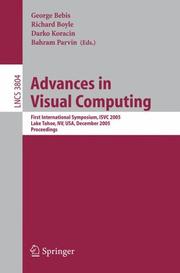 Advances in visual computingGeorge Bebis, Richard Boyle · 2005
 Problem solving and program design in CJeri R. Hanly, Elliot B. Koffman · 1993
 Data visualisationAndy Kirk · 2016
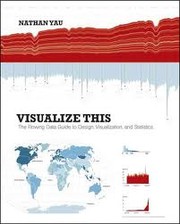 Visualize thisNathan Yau · 2011
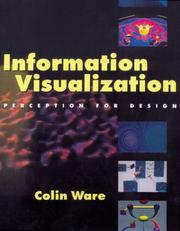 Information visualizationColin Ware · 2000
 Supercharge Power BIMatt Allington · 2018
Ranked by number of editions on Open Library, a rough measure of how lasting a book is.
🔗 Related topics
- Inferior temporal gyrus The inferior temporal gyrus is one of three gyri of the temporal lobe and is located below the middle temporal gyrus, connected behind with the inferior…
- Neuronal tuning In neuroscience, neuronal tuning refers to the hypothesized property of brain cells by which they selectively represent a particular type of sensory, associatio…
- Greeble (psychology) The Greebles are artificial objects designed to be used as stimuli in psychological studies of object and face recognition. They were named by the American…
- Parahippocampal gyrus The parahippocampal gyrus (or hippocampal gyrus) is a grey matter cortical region, a gyrus of the brain that surrounds the hippocampus and is part of the…
- Neural processing for individual categories of objects Discrete categories of objects such as faces, body parts, tools, animals and buildings have been associated with preferential activation in specialised…
- Object recognition (cognitive science) Visual object recognition refers to the cognitive ability to identify objects from visual perception. One important signature of visual object recognition…
- Colour centre The colour centre is a region in the brain primarily responsible for visual perception and cortical processing of colour signals received by the eye, which…
- Fusiform face area The fusiform face area (FFA, meaning spindle-shaped face area) is a part of the human visual system (while also activated in people blind from birth) that…