Everything about Transaction-level modeling
Approach for digital systems design
Transaction-level modeling (TLM) is an approach to modelling complex digital systems by using electronic design automation software. TLM is used primarily in the design and verification of complex systems-on-chip (SoCs) and other electronic systems where traditional register-transfer level (RTL) modeling would be too slow or resource-intensive for system-level analysis. TLM language (TLML) is a hardware description language, usually, written in C++ and based on SystemC library. TLMLs are used for modelling where details of communication among modules are separated from the details of the implementation of functional units or of the communication architecture. It's used for modelling of systems that involve complex data communication mechanisms. The modeling approach focuses on the transactions or transfers of data between functional blocks rather than the detailed implementation of those blocks or their interconnections. This abstraction enables faster simulation speeds, often orders of magnitude faster than RTL, while maintaining sufficient accuracy for system-level design decisions, software development, and architectural exploration. Wikipedia →
🧭 Start here: a 6-step reading path
- Read the overview: Transaction-level modelingA 5-minute orientation
- Skim a recent paper: A Data-Driven Visual Analytics Framework for Transaction-Level Retail Profit Modeling and Decision SupportInfluential work since 2022
- Pick up a classic book: Software EngineeringThe most-reprinted book on the subject
- Read the landmark paper: Multi-Accuracy Power and Performance Transaction-Level ModelingCited 30 times
- Go sideways: SystemCA closely related topic
- Go sideways: AccelleraA closely related topic
📖 Definitions
No dictionary entry for this exact phrase.
🗂️ The subject at a glance
🏆 Landmark papers (most cited)
Multi-Accuracy Power and Performance Transaction-Level Modeling
Quantitative analysis of the speed/accuracy trade-off in transaction level modeling
Transaction-level modeling for architectural and power analysis of PowerPC and CoreConnect-based systems
Methodology of High-Level Transaction Level Modeling Using 802.11 PHY Example
Making alive register transfer level and transaction level modeling in Ada
A State‐Based Modeling Approach for Efficient Performance Evaluation of Embedded System Architectures at Transaction Level
Dynamic power estimation using Transaction Level Modeling
SystemC Transaction-Level Modeling of an MPSoC Platform Based on an Open Source ISS by Using Interprocess Communication
🆕 Influential since 2022
📚 Books worth reading
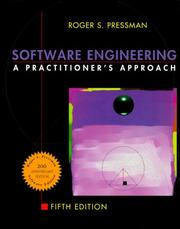 Software EngineeringRoger S. Pressman, Bruce Maxim · 1982
 Invitation to Computer ScienceG. Michael Schneider, Judith L. Gersting · 1995
 International Review of Research in Mental RetardationLaraine Masters Glidden · 1999
 The personal MBAJosh Kaufman · 2010
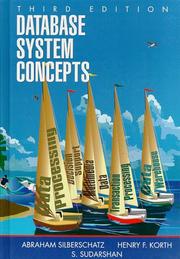 Database system conceptsAbraham Silberschatz · 1997
 Data Communications and NetworkingBehrouz A. Forouzan, Catherine Ann Coombs · 2000
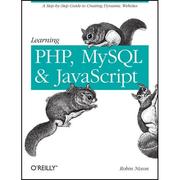 Learning PHP, MySQL & JavaScriptRobin Nixon · 2009
 Continuity & transformationAssociation of College and Research Libraries. National Conference · 1995
Ranked by number of editions on Open Library, a rough measure of how lasting a book is.
🔗 Related topics
- SystemC SystemC is a set of C++ classes and macros which provide an event-driven simulation interface (see also discrete event simulation). These facilities enable…
- Accellera Accellera Systems Initiative (Accellera) is a standards organization that supports a mix of user and vendor standards and open interfaces development in…
- Catapult C Catapult C Synthesis, a commercial electronic design automation product of Mentor Graphics, is a high-level synthesis tool, sometimes called algorithmic…
- IP-XACT IP-XACT, also known as IEEE 1685, is an XML format that defines and describes individual, re-usable electronic circuit designs (individual pieces of intellectua…
- Universal Verification Methodology The Universal Verification Methodology (UVM) is a standardized methodology for verifying integrated circuit designs. UVM is derived mainly from OVM (Open…
- High-level verification High-level verification (HLV), or electronic system-level (ESL) verification, is the task to verify ESL designs at high abstraction level, i.e., it is…
- Superlog HDL Superlog HDL is a hardware description language (HDL) developed by Co-Design Automation, Inc. in the late 1990s. It was designed as an extension to Verilog…
- Electronic system-level design and verification Electronic system level (ESL) design and verification is an electronic design methodology, focused on higher abstraction level concerns. The term Electronic…