Live briefing
Everything about Support vector machine
Set of methods for supervised statistical learning
In machine learning, a support vector machine (SVM) or support vector network is a supervised max-margin model with associated learning algorithms that analyze data for classification and regression analysis. Developed at AT&T Bell Laboratories, SVMs are one of the most studied models, being based on statistical learning frameworks of VC theory proposed by Vapnik and Chervonenkis (1974). Wikipedia →
🧭 Start here: a 6-step reading path
- Read the overview: Support vector machineA 5-minute orientation
- Skim a recent paper: Structured support vector machine with coarse-to-fine PatchMatch filtering for stereo matchingInfluential work since 2022
- Pick up a classic book: Artificial intelligenceThe most-reprinted book on the subject
- Read the landmark paper: Constructing support vector machine ensembleCited 404 times
- Go sideways: Least-squares support vector machineA closely related topic
- Go sideways: Kernel methodA closely related topic
📖 Definitions
No dictionary entry for this exact phrase.
🏆 Landmark papers (most cited)
Constructing support vector machine ensemble
Predicting structured objects with support vector machines
A new maximal-margin spherical-structured multi-class support vector machine
Graph-Regularized Structured Support Vector Machine for Object Tracking
Segmentation of handwritten words using structured support vector machine
Decomposing the tensor kernel support vector machine for neuroscience data with structured labels
Large-Scale Structured Output Classification via Multiple Structured Support Vector Machine by Splitting
Inductive manifold learning using structured support vector machine
🆕 Influential since 2022
Structured support vector machine with coarse-to-fine PatchMatch filtering for stereo matching
Prediction of blast-hole utilization rate using structured nonlinear support vector machine combined with optimization algorithms
Ellipsoid-Structured Localized Generalized Eigenvalue Proximal Support Vector Machines
📚 Books worth reading
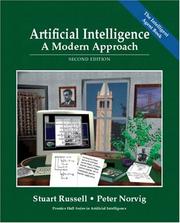 Artificial intelligenceStuart J. Russell, Peter Norvig · 1994
 Neural Information ProcessingTingwen Huang · 2012
 Using MPIWilliam Gropp, Ewing Lusk · 1994
 The Elements of Statistical LearningTrevor Hastie, Robert Tibshirani · 2001
 Medical image analysisAtam P. Dhawan · 2010
 Introduction to information retrievalChristopher D. Manning, Prabhakar Raghavan · 2008
 Intelligent Information and Database SystemsAli Selamat · 2013
 Machine learning for hackersDrew Conway · 2012
Ranked by number of editions on Open Library, a rough measure of how lasting a book is.
🔗 Related topics
- Least-squares support vector machine Least-squares support-vector machines (LS-SVM) for statistics and in statistical modeling, are least-squares versions of support-vector machines (SVM)…
- Kernel method In machine learning, kernel machines are a class of algorithms for pattern analysis, whose best known member is the support-vector machine (SVM). These…
- Sequential minimal optimization Sequential minimal optimization (SMO) is an algorithm for solving the quadratic programming (QP) problem that arises during the training of support-vector…
- Linear classifier In machine learning, a linear classifier makes a classification decision for each object based on a linear combination of its features. A simpler definition…
- Regularization perspectives on support vector machines Within mathematical analysis, regularization perspectives on support-vector machines provide a way of interpreting support-vector machines (SVMs) in the…
- Kernel perceptron In machine learning, the kernel perceptron is a variant of the popular perceptron learning algorithm that can learn kernel machines, i.e. non-linear classifiers…
- Structured support vector machine The structured supportvector machine is a machine learning algorithm that generalizes the support vector machine (SVM) classifier. Whereas the SVM classifier…
- Multiple kernel learning Multiple kernel learning refers to a set of machine learning methods that use a predefined set of kernels and learn an optimal linear or non-linear combination…