Live briefing
Everything about Sequence database
In the field of bioinformatics, a sequence database is a type of biological database that is composed of a large collection of computerized ("digital") nucleic acid sequences, protein sequences, or other polymer sequences stored on a computer. The UniProt database is an example of a protein sequence database. As of 2013 it contained over 40 million sequences and is growing at an exponential rate. Historically, sequences were published in paper form, but as the number of sequences grew, this storage method became unsustainable. Wikipedia →
🧭 Start here: a 6-step reading path
- Read the overview: Sequence databaseA 5-minute orientation
- Skim a recent paper: AlphaFold Protein Structure Database in 2024: providing structure coverage for over 214 million protein sequencesInfluential work since 2022
- Pick up a classic book: BioinformaticsThe most-reprinted book on the subject
- Read the landmark paper: The STRING database in 2023: protein–protein association networks and functional enrichment analyses for any sequenced genome of interestCited 10,462 times
- Go sideways: European Bioinformatics InstituteA closely related topic
- Go sideways: BioinformaticsA closely related topic
📖 Definitions
No dictionary entry for this exact phrase.
🗂️ The subject at a glance
🏆 Landmark papers (most cited)
The STRING database in 2023: protein–protein association networks and functional enrichment analyses for any sequenced genome of interest
AlphaFold Protein Structure Database: massively expanding the structural coverage of protein-sequence space with high-accuracy models
PlantCARE, a database of plant cis-acting regulatory elements and a portal to tools for in silico analysis of promoter sequences
Introducing EzBioCloud: a taxonomically united database of 16S rRNA gene sequences and whole-genome assemblies
Probability-based protein identification by searching sequence databases using mass spectrometry data
Reference sequence (RefSeq) database at NCBI: current status, taxonomic expansion, and functional annotation
An approach to correlate tandem mass spectral data of peptides with amino acid sequences in a protein database
🆕 Influential since 2022
AlphaFold Protein Structure Database in 2024: providing structure coverage for over 214 million protein sequences
The UNITE database for molecular identification and taxonomic communication of fungi and other eukaryotes: sequences, taxa and classifications reconsidered
The IPD-IMGT/HLA database: recent developments in sequence submission
The antiSMASH database version 4: additional genomes and BGCs, new sequence-based searches and more
Considerations for constructing a protein sequence database for metaproteomics
📚 Books worth reading
 BioinformaticsAndreas D. Baxevanis, B. F. Francis Ouellette · 2001
 Introduction to bioinformaticsStephen A. Krawetz, David D. Womble · 2002
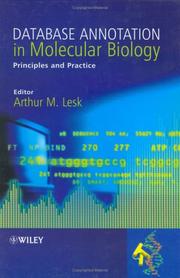 Database annotation in molecular biologyArthur M. Lesk · 2005
 Genetic DatabasesO. Corrigan · 2004
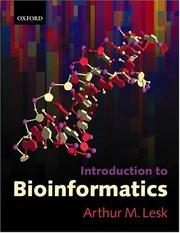 Introduction to bioinformaticsArthur M. Lesk · 2002
 Gene function analysisMichael F. Ochs · 2007
 BLASTIan Korf · 2003
 RNA and DNA editingRuslan Aphasizhev · 2011
Ranked by number of editions on Open Library, a rough measure of how lasting a book is.
🔗 Related topics
- European Bioinformatics Institute The European Bioinformatics Institute (EMBL-EBI) is an intergovernmental organization (IGO) which, as part of the European Molecular Biology Laboratory…
- Bioinformatics Bioinformatics (/ˌbaɪ.oʊˌɪnfərˈmætɪks/ ) is an interdisciplinary field of science that develops computational methods and software tools for understanding…
- UniProt UniProt is a freely accessible database of protein sequence and functional information, many entries being derived from genome sequencing projects. It…
- Computational genomics Computational genomics refers to the use of computational and statistical analysis to decipher biology from genome sequences and related data, including…
- Sequence analysis In bioinformatics, sequence analysis is the process of subjecting a DNA, RNA or peptide sequence to any of a wide range of analytical methods to understand…
- Sequence alignment In bioinformatics, a sequence alignment is a way of arranging the sequences of DNA, RNA, or protein to identify regions of similarity that may be a consequence…
- BioJava BioJava is an open-source software project dedicated to providing Java tools for processing biological data. BioJava is a set of library functions written…
- Protein family A protein family is a group of evolutionarily related proteins. In many cases, a protein family has a corresponding gene family, in which each gene encodes…