Live briefing
Everything about Sequence analysis
Identification and study of genomic sequences
In bioinformatics, sequence analysis is the process of subjecting a DNA, RNA or peptide sequence to any of a wide range of analytical methods to understand its features, function, structure, or evolution. It can be performed on the entire genome, transcriptome or proteome of an organism, and can also involve only selected segments or regions, like tandem repeats and transposable elements. Methodologies used include sequence alignment, searches against biological databases, and others. Wikipedia →
🧭 Start here: a 6-step reading path
- Read the overview: Sequence analysisA 5-minute orientation
- Skim a recent paper: Search and sequence analysis tools services from EMBL-EBI in 2022Influential work since 2022
- Pick up a classic book: Gene Cloning and DNA AnalysisThe most-reprinted book on the subject
- Read the landmark paper: The CLUSTAL_X windows interface: flexible strategies for multiple sequence alignment aided by quality analysis toolsCited 31,926 times
- Go sideways: BioinformaticsA closely related topic
- Go sideways: Gene predictionA closely related topic
📖 Definitions
No dictionary entry for this exact phrase.
🏆 Landmark papers (most cited)
The CLUSTAL_X windows interface: flexible strategies for multiple sequence alignment aided by quality analysis tools
QIIME allows analysis of high-throughput community sequencing data
The Genome Analysis Toolkit: A MapReduce framework for analyzing next-generation DNA sequencing data
Initial sequencing and analysis of the human genome
Geneious Basic: An integrated and extendable desktop software platform for the organization and analysis of sequence data
🆕 Influential since 2022
📚 Books worth reading
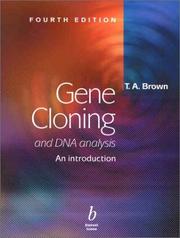 Gene Cloning and DNA AnalysisT. A. Brown · 2001
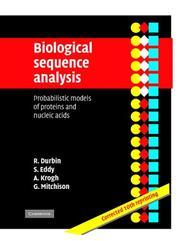 Biological sequence analysisRichard M. Durbin, Sean R. Eddy · 1998
 Introduction to cancer biologyRobin Hesketh · 2012
 BioinformaticsAndreas D. Baxevanis, B. F. Francis Ouellette · 2001
- 📕Next Generation Sequencing Data AnalysisXinkun Wang · 2016
- 📕DNA NanoscienceKenneth Douglas · 2016
 Introduction to Calculus and Classical AnalysisOmar Hijab · 2007
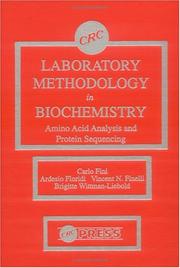 Laboratory methodology in biochemistryCarlo Fini, Ardesio Floridi · 1989
Ranked by number of editions on Open Library, a rough measure of how lasting a book is.
🔗 Related topics
- Bioinformatics Bioinformatics (/ˌbaɪ.oʊˌɪnfərˈmætɪks/ ) is an interdisciplinary field of science that develops computational methods and software tools for understanding…
- Gene prediction In computational biology, gene prediction or gene finding refers to the process of identifying the regions of genomic DNA that encode genes. This includes…
- Functional genomics Functional genomics is a field of molecular biology that attempts to describe gene (and protein) functions and interactions. Functional genomics make use…
- RNA-Seq RNA-Seq (short for RNA sequencing) is a next-generation sequencing (NGS) technique used to quantify and identify RNA molecules in a biological sample,…
- DNA annotation In molecular biology and genetics, DNA annotation or genome annotation is the process of describing the structure and function of the components of a genome…
- List of RNA-Seq bioinformatics tools RNA-Seq is a technique that allows transcriptome studies (see also Transcriptomics technologies) based on next-generation sequencing technologies. This…
- Genomics Genomics is an interdisciplinary field of molecular biology focusing on the structure, function, evolution, mapping, and editing of genomes. A genome is…
- Transcriptomics technologies Transcriptomics technologies are the techniques used to study an organism's transcriptome, the sum of all of its RNA transcripts. The information content…