Everything about Pun
Form of word play that sounds similar to or has a similar meaning to another word

A pun, also known as a paronomasia in the context of linguistics, is a form of word play that exploits multiple meanings of a term, or of similar-sounding words, for an intended humorous or rhetorical effect. These ambiguities can arise from the intentional use of homophonic, homographic, metonymic, or figurative language. Wikipedia →
🧭 Start here: a 6-step reading path
- Read the overview: PunA 5-minute orientation
- Skim a recent paper: Humor experience facilitates ongoing cognitive tasks: Evidence from pun comprehensionInfluential work since 2022
- Pick up a classic book: The Phantom TollboothThe most-reprinted book on the subject
- Read the landmark paper: Adding Spice to the Porridge11‘Porridge’ is British slang for a prison sentence. E.g. ‘Doing his porridge’. The term is most commonly thought to be an allusion to the fact that porridge is, or used to be, a common food in prison. The term is also thought to be a pun on the much older slang word for prison, ‘stir’.: The development of a synthetic cannabinoid market in an English prisonCited 106 times
- Go sideways: WordplayA closely related topic
- Go sideways: HomophoneA closely related topic
📖 Definitions
Symbol Former ISO 639-3 language code for Pubian.
Verb To beat; strike with force; to ram; to pound, as in a mortar; reduce to powder, to pulverize.
Verb To make or tell a pun; to make a play on words.
Noun A joke or type of wordplay in which similar definitions or sounds of two words or phrases, or different definitions of the same word, are deliberately confused.
🗂️ The subject at a glance
🏆 Landmark papers (most cited)
Adding Spice to the Porridge11‘Porridge’ is British slang for a prison sentence. E.g. ‘Doing his porridge’. The term is most commonly thought to be an allusion to the fact that porridge is, or used to be, a common food in prison. The term is also thought to be a pun on the much older slang word for prison, ‘stir’.: The development of a synthetic cannabinoid market in an English prison
53BP1-mediated DNA double strand break repair: Insert bad pun here
Preparation and characterization of PuN pellets containing ZrN and TiN
Urban Building Energy and Climate (UrBEC) simulation: Example application and field evaluation in Sai Ying Pun, Hong Kong
Photoelectron spectroscopy study of PuN
The pun in advertising: A pragmatic approach
Hemispheric asymmetry and pun comprehension: When cowboys have sore calves
Focus on the Pun
🆕 Influential since 2022
Humor experience facilitates ongoing cognitive tasks: Evidence from pun comprehension
“So, we kind of started from scratch, no pun intended”: What can students learn from designing games?
Eyeing the pun: an eye-tracking study on the synergistic effects of visual and textual elements in tourism advertising
Predicted thermophysical properties of UN, PuN, and (U,Pu)N
Impacts of the COVID-19 pandemic on the spatio-temporal characteristics of a bicycle-sharing system: A case study of Pun Pun, Bangkok, Thailand
📚 Books worth reading
 The Phantom TollboothNorton Juster · 1961
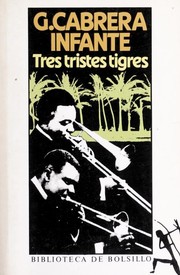 Tres tristes tigresGuillermo Cabrera Infante · 1965
- 📕Puniana, or, Thoughts wise and other-wiseHugh Rowley · 1866
 TraductioDirk Delabastita · 1997
 The complete pun bookArt Moger · 1979
 Otter nonsenseNorton Juster · 1982
 Pun funEnnis Rees · 1965
 Have a Little PunFrida Clements, Lena Corwin · 2015
Ranked by number of editions on Open Library, a rough measure of how lasting a book is.
🔗 Related topics
- Wordplay Wordplay (also: play-on-words) is a literary technique and a form of wit in which words used become the main subject of the work, primarily for the purpose…
- Homophone A homophone (/ˈhɒməfoʊn, ˈhoʊmə-/) is a word that is pronounced the same as another word but differs in meaning or in spelling. The two words may be spelled…
- Homonym In linguistics, homonyms are words that are either homographs, words that mean different things but have the same spelling (regardless of pronunciation);…
- List of forms of wordplay This is a list of techniques used in wordplay. Techniques that involve the phonetic values of words Engrish Chinglish Homonym: words with the same sounds…
- Japanese wordplay Japanese wordplay relies on the nuances of the Japanese language and Japanese script for humorous effect, functioning somewhat like a cross between a pun…
- Homograph A homograph (from the Greek: ὁμός, homós 'same' and γράφω, gráphō 'write') is a word that shares the same written form as another word but has a different…
- Homophonic puns in Standard Chinese Standard Chinese, like many Sinitic varieties, has a significant number of homophonous syllables and words due to its limited phonetic inventory. The Cihai…
- Inherently funny word An inherently funny word is a word that is humorous without context, often more for its phonetic structure than for its meaning. Vaudeville tradition holds…