Everything about Homophone
Words pronounced the same but differing in meaning or spelling

A homophone is a word that is pronounced the same as another word but differs in meaning or in spelling. The two words may be spelled the same, for example rose (flower) and rose, or spelled differently, as in rain, reign, and rein. The term homophone sometimes applies to units longer or shorter than words, for example a phrase, letter, or groups of letters which are pronounced the same as a counterpart. Any unit with this property is said to be homophonous. Wikipedia →
🧭 Start here: a 6-step reading path
- Read the overview: HomophoneA 5-minute orientation
- Skim a recent paper: Production can enhance semantic encoding: Evidence from forced-choice recognition with homophone versus synonym luresInfluential work since 2022
- Pick up a classic book: HomophonesThe most-reprinted book on the subject
- Read the landmark paper: Forbear is a Homophone: Lexical Prosody Does Not Constrain Lexical AccessCited 177 times
- Go sideways: Grave accentA closely related topic
- Go sideways: General ChineseA closely related topic
📖 Definitions
Noun A word which is pronounced the same as another word but differs in spelling or meaning or origin.
Noun A letter or group of letters which are pronounced the same as another letter or group of letters.
🗂️ The subject at a glance
🏆 Landmark papers (most cited)
Forbear is a Homophone: Lexical Prosody Does Not Constrain Lexical Access
Phonology and Orthography in Visual Word Recognition: Effects of Masked Homophone Primes
Voornaam is not (really) a Homophone: Lexical Prosody and Lexical Access in Dutch
Morphological awareness in Chinese: Unique associations of homophone awareness and lexical compounding to word reading and vocabulary knowledge in Chinese children
Homophone effects in lexical decision.
The Homophone Effect in Written French: The Case of Verb-Noun Inflection Errors
Ambiguity and visual word recognition: Can feedback explain both homophone and polysemy effects?
The rites of righting writing: Homophone remediation in acquired dysgraphia
🆕 Influential since 2022
Production can enhance semantic encoding: Evidence from forced-choice recognition with homophone versus synonym lures
Context-Aware Multimodal Fusion with Sensor-Augmented Cross-Modal Learning: The BLAF Architecture for Robust Chinese Homophone Disambiguation in Dynamic Environments
The effects of lexical frequency and homophone neighborhood density on incomplete tonal neutralization
Frame-shifting instead of incongruity is necessary for pun comprehension: evidence from an ERP study on Chinese homophone puns
Two bee oar knot too be: the effects of orthography and bilingualism on spoken homophone production
📚 Books worth reading
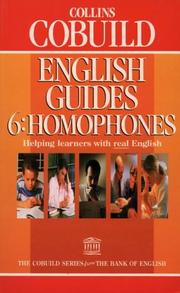 HomophonesGwyneth Fox · 1995
- 📕Hooray for H H H!Helen Zeitzoff · 2006
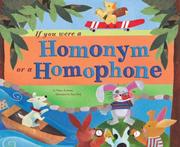 If You Were a Homonym or a Homophone (Word Fun) (Word Fun)Nancy Loewen · 2007
Ranked by number of editions on Open Library, a rough measure of how lasting a book is.
🔗 Related topics
- Grave accent This page uses IPA notation for orthographic or other linguistic analysis. For the meaning of how ⟨ ⟩, | |, / /, and [ ] are used here, see this page.…
- General Chinese General Chinese (Chinese: 通字; pinyin: tōng zì; Wade–Giles: t'ung¹-tzu⁴) is a diaphonemic orthography invented by Yuen Ren Chao to represent the pronunciations…
- Erhua This article contains special characters. Without proper rendering support, you may see question marks, boxes, or other symbols instead of the small-sized…
- L-vocalization This article contains phonetic transcriptions in the International Phonetic Alphabet (IPA). For an introductory guide on IPA symbols, see Help:IPA. For…
- English-language vowel changes before historical /l/ This article contains phonetic transcriptions in the International Phonetic Alphabet (IPA). For an introductory guide on IPA symbols, see Help:IPA. For…
- Chinese character sounds Chinese character sounds (simplified Chinese: 汉字字音; traditional Chinese: 漢字字音; pinyin: hànzì zìyīn) are the pronunciations of Chinese characters. The standard…
- Homophonic puns in Standard Chinese Standard Chinese, like many Sinitic varieties, has a significant number of homophonous syllables and words due to its limited phonetic inventory. The Cihai…
- É É (minuscule: é), known as E-acute, is a Latin-script character composed of the letter E and an acute accent. In English, it is used for loanwords (such…