Everything about Pseudoscience
Unscientific claims presented as scientific

Pseudoscience consists of statements, beliefs, or practices that claim to be scientific but are inherently incompatible with the scientific method. Pseudoscience is often characterized by contradictory, exaggerated or unfalsifiable claims; reliance on confirmation bias rather than rigorous attempts at refutation; lack of openness to evaluation by other experts; absence of systematic practices when developing hypotheses; and continued adherence long after the pseudoscientific hypotheses have been experimentally discredited. It is not the same as junk science, which is spurious or fraudulent scientific work. Wikipedia →
🧭 Start here: a 6-step reading path
- Read the overview: PseudoscienceA 5-minute orientation
- Skim a recent paper: Pseudoscience and fraudulent products for COVID-19 managementInfluential work since 2022
- Pick up a classic book: Dracula's guest, and other weird storiesThe most-reprinted book on the subject
- Read the landmark paper: Examining the Relationship Between Conspiracy Theories, Paranormal Beliefs, and Pseudoscience Acceptance Among a University PopulationCited 253 times
- Go sideways: Demarcation problemA closely related topic
- Go sideways: Imre LakatosA closely related topic
📖 Definitions
Noun Any body of knowledge that purports to be scientific or to be supported by science (or may appear to be scientific) but which fails to comply with the scientific method (or rather, is not true science).
Noun Fictitious science as portrayed in science fiction.
🏆 Landmark papers (most cited)
Examining the Relationship Between Conspiracy Theories, Paranormal Beliefs, and Pseudoscience Acceptance Among a University Population
The Pseudoscience of Single-Sex Schooling
Science and pseudoscience in the development of eye movement desensitization and reprocessing Implications for clinical psychology
A history of facilitated communication: Science, pseudoscience, and antiscience science working group on facilitated communication.
Distinguishing science from pseudoscience in school psychology: Science and scientific thinking as safeguards against human error
Science denial as a form of pseudoscience
The Future of a Mistake: Will Discrepancy Measurement Continue to Make the Learning Disabilities Field a Pseudoscience?
Illusions of causality at the heart of pseudoscience
🆕 Influential since 2022
Pseudoscience and fraudulent products for COVID-19 management
Clarifying the relations between intellectual humility and pseudoscience beliefs, conspiratorial ideation, and susceptibility to fake news
Why homoeopathy is pseudoscience
Baseless Claims and Pseudoscience in Health and Wellness: A Call to Action for the Sports, Exercise, and Nutrition-Science Community
The fringe is the centre: Racism, pseudoscience and authoritarianism in the dominant English education policy network
📚 Books worth reading
 Dracula's guest, and other weird storiesBram Stoker, Washington Irving · 1914
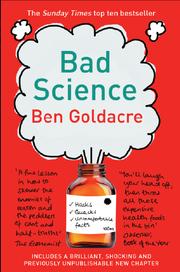 Bad ScienceBen Goldacre · 2008
 The Facts in the Case of M. ValdemarEdgar Allan Poe · 1846
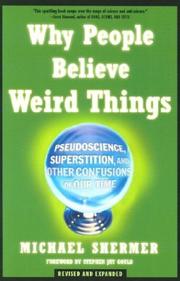 Why people believe weird thingsMichael Shermer · 1997
 The unpersuadablesWill Storr · 2013
 The Penguin Book of Horror StoriesJ. A. Cuddon, Anonymous · 1984
 The Scientific AttitudeLee C. McIntyre · 2019
 PseudoscienceAllison B. Kaufman, James C. Kaufman · 2018
Ranked by number of editions on Open Library, a rough measure of how lasting a book is.
🔗 Related topics
- Demarcation problem In philosophy of science and epistemology, the demarcation problem is the question of how to distinguish between science and non-science. It also examines…
- Imre Lakatos Imre Lakatos (UK: /ˈlækətɒs/, US: /-toʊs/; Hungarian: Lakatos Imre [ˈlɒkɒtoʃ ˈimrɛ]; 9 November 1922 – 2 February 1974) was a Hungarian-born philosopher…
- Astrology and science Astrology consists of a number of belief systems that hold that there is a relationship between astronomical phenomena and events or descriptions of personality…
- Falsifiability Falsifiability is a standard of evaluation of scientific statements, including theories and hypotheses. A statement is falsifiable if it belongs to a language…
- Fallibilism Originally, fallibilism (from Medieval Latin: fallibilis, "liable to error") is the philosophical principle that propositions can be accepted even though…
- Critical rationalism Critical rationalism is Karl Popper's answer to what he considered the most important problems of epistemology and philosophy of science: the problems…
- Credulity Credulity is a person's willingness or ability to believe that a statement is true, especially on minimal or uncertain evidence. Credulity is not necessarily…
- Dr. Sarvepalli Radhakrishnan Rajasthan Ayurved University Dr. Sarvepalli Radhakrishnan Rajasthan Ayurved University, formerly Rajasthan Ayurved University, is an Ayurved university in the state of Rajasthan, India…