Live briefing
Everything about Credulity
Willingness or ability to believe that a statement is true
Credulity is a person's willingness or ability to believe that a statement is true, especially on minimal or uncertain evidence. Credulity is not necessarily a belief in something that may be false: the subject of the belief may even be correct, but a credulous person will believe it without good evidence. Wikipedia →
🧭 Start here: a 6-step reading path
- Read the overview: CredulityA 5-minute orientation
- Skim a recent paper: Epistemic trust and associations with psychopathology: Validation of the German version of the Epistemic Trust, Mistrust and Credulity-Questionnaire (ETMCQ)Influential work since 2022
- Pick up a classic book: Six Impossible Things Before BreakfastThe most-reprinted book on the subject
- Read the landmark paper: Credulity, lies, and costly talkCited 330 times
- Go sideways: GullibilityA closely related topic
- Go sideways: Michael ShermerA closely related topic
📖 Definitions
Noun A willingness to believe in someone or something in the absence of reasonable proof; credulousness.
Noun Faith, credence; acceptance or maintenance of a belief.
🏆 Landmark papers (most cited)
Credulity, lies, and costly talk
Why New Issues and High-Accrual Firms Underperform: The Role of Analysts’ Credulity
Causality, Confirmation, Credulity, and Structural Equation Modeling
Propaganda and credulity
Negatively-Biased Credulity and the Cultural Evolution of Beliefs
Unpacking trust: The Italian validation of the Epistemic Trust, Mistrust, and Credulity Questionnaire (ETMCQ)
Political Orientation Predicts Credulity Regarding Putative Hazards
A Neuropsychological Test of Belief and Doubt: Damage to Ventromedial Prefrontal Cortex Increases Credulity for Misleading Advertising
🆕 Influential since 2022
Epistemic trust and associations with psychopathology: Validation of the German version of the Epistemic Trust, Mistrust and Credulity-Questionnaire (ETMCQ)
Iranian adaptation of the Epistemic Trust, Mistrust, and Credulity Questionnaire (ETMCQ): Validity, reliability, discriminant ability, and sex invariance
“Trust me, do not trust anyone”: how epistemic mistrust and credulity are associated with conspiracy mentality
Epistemic Trust, Mistrust and Credulity Questionnaire (ETMCQ) validation in French language: Exploring links to loneliness
Development and validation of the Revised Epistemic Trust, Mistrust and Credulity Questionnaire (ETMCQ-R)
📚 Books worth reading
 Six Impossible Things Before BreakfastLewis Wolpert · 2006
- 📕Social Psychology of GullibilityJoseph P. Forgas, Roy F. Baumeister · 2019
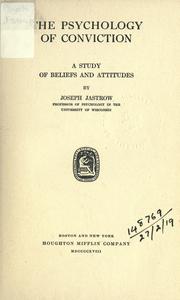 The Psychology Of ConvictionJoseph Jastrow · 1918
 BelieverSarah Krasnostein · 2022
 CredulityEmily Ogden · 2018
 Error and eccentricity in human beliefJoseph Jastrow · 1962
- 📕Of credulity and incredulityMeric Casaubon · 1668
 The miracle mythLawrence A. Shapiro · 2016
Ranked by number of editions on Open Library, a rough measure of how lasting a book is.
🔗 Related topics
- Gullibility Gullibility is a failure of social intelligence in which a person is easily tricked or manipulated into an ill-advised course of action. It is closely…
- Michael Shermer Michael Brant Shermer (born September 8, 1954) is an American science writer, historian of science, executive director of The Skeptics Society, and founding…
- Pseudoscience Pseudoscience consists of statements, beliefs, or practices that claim to be scientific but are inherently incompatible with the scientific method. Pseudoscienc…
- Cryptozoology Cryptozoology is a pseudoscience and subculture that searches for and studies unknown, legendary, or extinct animals whose present existence is disputed…
- Superstition A superstition is any belief or practice considered by non-practitioners to be irrational or supernatural. It is commonly applied to beliefs and practices…
- Why People Believe Weird Things Why People Believe Weird Things: Pseudoscience, Superstition, and Other Confusions of Our Time is a 1997 book by science writer Michael Shermer. The foreword…
- The Skeptic's Dictionary The Skeptic's Dictionary is a collection of cross-referenced skeptical essays by Robert Todd Carroll, published on his website skepdic.com and in a printed…
- Scientific skepticism Scientific skepticism or rational skepticism (also spelled scepticism), sometimes referred to as skeptical inquiry, is a position in which one questions…