Live briefing
Everything about Object lifetime
Lifetime of a computer software object
In object-oriented programming (OOP), object lifetime is the period of time between an object's creation and its destruction. In some programming contexts, object lifetime coincides with the lifetime of a variable that represents the object. In other contexts – where the object is accessed by reference – object lifetime is not determined by the lifetime of a variable. For example, destruction of the variable may only destroy the reference, not the referenced object. Wikipedia →
🧭 Start here: a 6-step reading path
- Read the overview: Object lifetimeA 5-minute orientation
- Pick up a classic book: Pride and PrejudiceThe most-reprinted book on the subject
- Read the landmark paper: Generating object lifetime traces with MerlinCited 47 times
- Go sideways: FinalizerA closely related topic
- Go sideways: Manual memory managementA closely related topic
📖 Definitions
No dictionary entry for this exact phrase.
🗂️ The subject at a glance
🏆 Landmark papers (most cited)
Generating object lifetime traces with Merlin
Perirhinal cortex tracks degree of recent as well as cumulative lifetime experience with object concepts
OPTIMAL SEARCH FOR AN OBJECT WITH A RANDOM LIFETIME
Optimizing network lifetime: ERBS-REE for resilient object detection and tracking in resource-constrained WSN environments
On models for object lifetime distributions
Whole-Object Fluorescence Lifetime Setup for Efficient Non-Imaging Quantitative Intracellular Fluorophore Measurements
FLIMExplorer: interactive GUI for object-based visualization and analysis of fluorescence lifetime images
Methodology for the Experimental Evaluation of Memory Allocation Strategies and Object Lifetime Models in C++ Systems
📚 Books worth reading
 Pride and PrejudiceJane Austen · 1813
 The Saint' everlasting restRichard Baxter, Isaac Crewdson · 1650
- 📕Turn Out JournalsM. R. N. Publishing · 2021
 Cartesian meditationsEdmund Husserl, Dorion Cairns · 1960
 Bass guitar for dummiesPatrick Pfeiffer · 2009
 Programming and problem solving with C++Nell B. Dale, Chip Weems · 1996
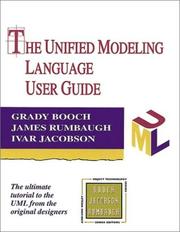 The unified modeling language user guideGrady Booch, James Rumbaugh · 1999
 Understanding object-oriented programming with JavaTimothy Budd · 1998
Ranked by number of editions on Open Library, a rough measure of how lasting a book is.
🔗 Related topics
- Finalizer In computer science, a finalizer or finalize method is a special method that performs finalization, generally some form of cleanup. A finalizer is executed…
- Manual memory management In computer science, manual memory management refers to the usage of manual instructions by the programmer to identify and deallocate unused objects, or…
- Destructor (computer programming) In object-oriented programming, a destructor (sometimes abbreviated dtor) is a method which is invoked mechanically just before the memory of the object…
- Resource acquisition is initialization Resource acquisition is initialization (RAII) is a programming idiom used in several object-oriented, statically typed programming languages to describe…
- Placement syntax Placement syntax in the C++ programming language refers to the syntax for explicitly specifying the memory management of individual objects (i.e. their…
- Dynamic variable In computer programming, a dynamic variable is a local variable that is created to reside in manually allocated memory that can be allocated and deallocated…
- Garbage (computer science) In computer science, garbage includes data, objects, or other regions of the memory of a computer system (or other system resources), which will not be…
- Dispose pattern In object-oriented programming, the dispose pattern is a design pattern for resource management. In this pattern, a resource is held by an object, and…