Everything about Placement syntax
C++ syntax for specifying placement of objects in memory
Placement syntax in the C++ programming language refers to the syntax for explicitly specifying the memory management of individual objects. Normally, when an object is created dynamically, an allocation function is invoked in such a way that it will both allocate memory for the object, and initialize the object within the newly allocated memory. The placement syntax allows the programmer to supply additional arguments to the allocation function. A common use is to supply a pointer to a suitable region of storage where the object can be initialized, thus separating memory allocation from object construction. Wikipedia →
🧭 Start here: a 6-step reading path
- Read the overview: Placement syntaxA 5-minute orientation
- Skim a recent paper: SPATIAL STUDY OF SOCIAL FACILITIES PLACEMENT IN DENSE SETTLEMENT USING SPACE SYNTAX ANALYSIS CASE STUDY: BANJAR BUALU, BENOA VILLAGE, BALIInfluential work since 2022
- Pick up a classic book: The acquisition of syntaxThe most-reprinted book on the subject
- Read the landmark paper: After the highwayman: Syntax and successful placement of press releases in newspapersCited 28 times
- Go sideways: New and delete (C++)A closely related topic
- Go sideways: C++11A closely related topic
📖 Definitions
No dictionary entry for this exact phrase.
🗂️ The subject at a glance
🏆 Landmark papers (most cited)
After the highwayman: Syntax and successful placement of press releases in newspapers
Clitic Placement after Syntax: Evidence from Wolof Person and Locative Markers
Syntax and Morphology in the Placement of Clitics in European and Brazilian Portuguese
A Study on the Placement of Game Objects using Space Syntax
The syntax and semantics of quantifier placement
The Syntax of Clitic Placement in European Portuguese
Adverb placement: A case study in anti-symmetric syntax (review)
Clitic placement at the syntax‐phonology interface: A case study of Berber*
🆕 Influential since 2022
📚 Books worth reading
 The acquisition of syntaxMarc-Ariel Friedemann, Luigi Rizzi · 1999
 Grammar, Rhetoric and Usage in EnglishNuria Yáñez-Bouza · 2014
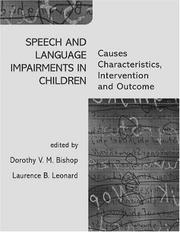 Speech and language impairments in childrenD. V. M. Bishop, Laurence B. Leonard · 2000
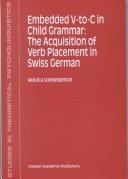 Embedded V-to-C in Child GrammarManuela Schönenberger · 1899
- 📕Adverb PlacementArtemis Alexiadou · 1997
 Studies on Old High German syntaxKatrin Axel · 2004
- 📕Aspects of adverbial placement in English and SloveneMargaret G. Davis · 1989
 Contexts and constructionsAlexander Bergs, Gabriele Diewald · 2009
Ranked by number of editions on Open Library, a rough measure of how lasting a book is.
🔗 Related topics
- New and delete (C++) In the C++ programming language, new and delete are a pair of language constructs that perform dynamic memory allocation, object construction and object…
- C++11 C++11 is a version of a joint technical standard, ISO/IEC 14882, by the International Organization for Standardization (ISO) and International Electrotechnical…
- C++ classes A class in C++ is a user-defined type or data structure declared with any of the keywords class, struct or union (the first two are collectively referred…
- Constexpr constexpr is a specifier keyword in the C and C++ programming languages which, roughly speaking, specifies that something may be evaluated at compile time…
- Template (C++) Templates are a feature of the C++ programming language that allow functions and classes to operate with generic types. This allows a function or class…
- Allocator (C++) In C++ computer programming, allocators are a component of the C++ Standard Library. The standard library provides several data structures, such as list…
- Expression templates Expression templates are a C++ template metaprogramming technique that builds structures representing a computation at compile time, where expressions…
- Destructor (computer programming) In object-oriented programming, a destructor (sometimes abbreviated dtor) is a method which is invoked mechanically just before the memory of the object…