Live briefing

Everything about Lightness
Property of a color
Lightness is a visual perception of the luminance of an object. It is often judged relative to a similarly lit object. In colorimetry and color appearance models, lightness is a prediction of how an illuminated color will appear to a standard observer. While luminance is a linear measurement of light, lightness is a linear prediction of the human perception of that light. Wikipedia →
🧭 Start here: a 6-step reading path
- Read the overview: LightnessA 5-minute orientation
- Skim a recent paper: The unbearable lightness of climate populismInfluential work since 2022
- Pick up a classic book: Course of six lectures on the chemical history of a candleThe most-reprinted book on the subject
- Read the landmark paper: Lightness and Retinex TheoryCited 3,448 times
- Go sideways: CIECAM02A closely related topic
- Go sideways: ColorfulnessA closely related topic
📖 Definitions
Noun the condition of being illuminated
Noun the relative whiteness or transparency of a colour
Noun The product of being illuminated.
Noun The state of having little (or less) weight, or little force.
🏆 Landmark papers (most cited)
Lightness and Retinex Theory
Determining lightness from an image
An anchoring theory of lightness perception.
Perceived Lightness Depends on Perceived Spatial Arrangement
Yearning for Lightness
A Theory of Illusory Lightness and Transparency in Monocular and Binocular Images: The Role of Contour Junctions
A New Effect of Pattern on Perceived Lightness
Fundamental problems in color vision. I. The principle governing changes in hue, saturation, and lightness of non-selective samples in chromatic illumination.
🆕 Influential since 2022
The unbearable lightness of climate populism
Effects of environmental colours in virtual reality: Physiological arousal affected by lightness and hue
Flexible Meta‐Tape with Wide Gamut, Low Lightness and Low Infrared Emissivity for Visible‐Infrared Camouflage
Exploring the CIEDE2000 thresholds for lightness, chroma, and hue differences in dentistry
CIEDE2000 lightness, chroma and hue human gingiva thresholds
📚 Books worth reading
 Course of six lectures on the chemical history of a candleMichael Faraday, Crookes, William Sir · 1861
 Natural philosophyJohn Herbert Sangster · 1861
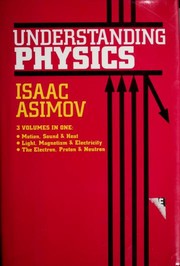 Understanding PhysicsIsaac Asimov · 1966
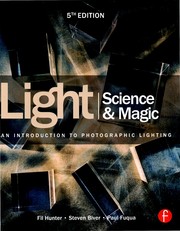 Light-- science and magicFil Hunter, Steven Biver · 2012
 Designing with lightJ. Michael Gillette, Michael J. Gillette · 1978
 Lighting Design BasicsMark Karlen, Christina Spangler · 2006
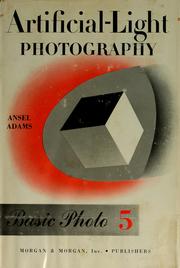 Artificial-light photographyAnsel Adams · 1956
 LightingRobert Bean · 2003
Ranked by number of editions on Open Library, a rough measure of how lasting a book is.
🔗 Related topics
- CIECAM02 In colorimetry, CIECAM02 is the color appearance model published in 2002 by the International Commission on Illumination (CIE) Technical Committee 8-01…
- Colorfulness Colorfulness, chroma and saturation are attributes of perceived color relating to chromatic intensity. As defined formally by the International Commission…
- Adams chromatic valence color space Adams chromatic valence color spaces are a class of color spaces suggested by Elliot Quincy Adams. Two important Adams chromatic valence spaces are CIELUV…
- Hunter Lab Hunter Lab (also known as Hunter L,a,b) is a color space defined in 1948 by Richard S. Hunter. It was designed to be computed via simple formulas from…
- Color appearance model A color appearance model (CAM) is a mathematical model that seeks to describe the perceptual aspects of human color vision, i.e. viewing conditions under…
- List of color spaces and their uses This is a list of color spaces, grouped by the color model that is used for part of their specification. Color models can be based on physics or human…
- Chromatic adaptation Chromatic adaptation is the human visual system's ability to adjust to changes in illumination in order to preserve the appearance of object colors. It…
- CIELAB color space The CIELAB color space, also referred to as L*a*b*, is a color space defined by the International Commission on Illumination (abbreviated CIE) in 1976…